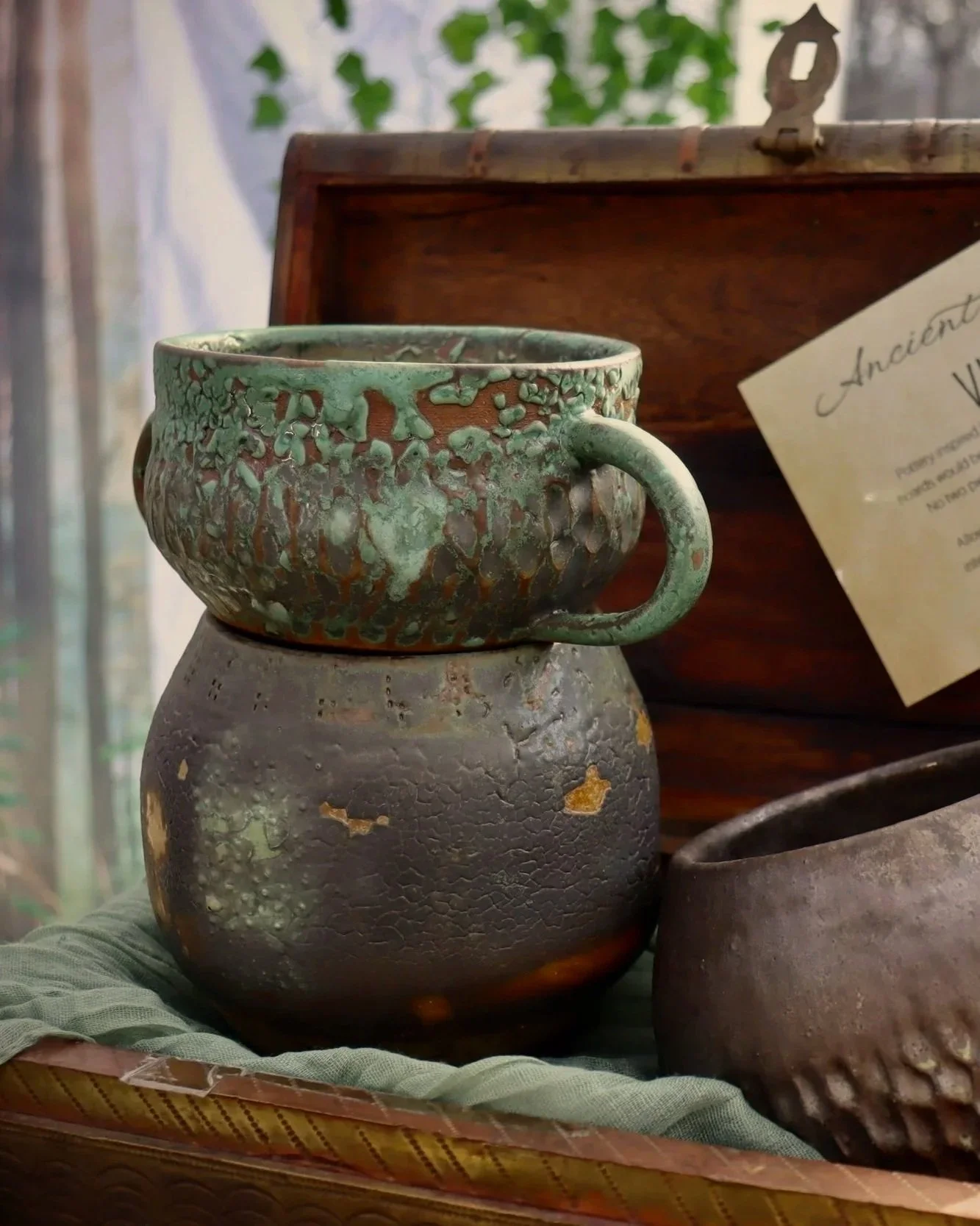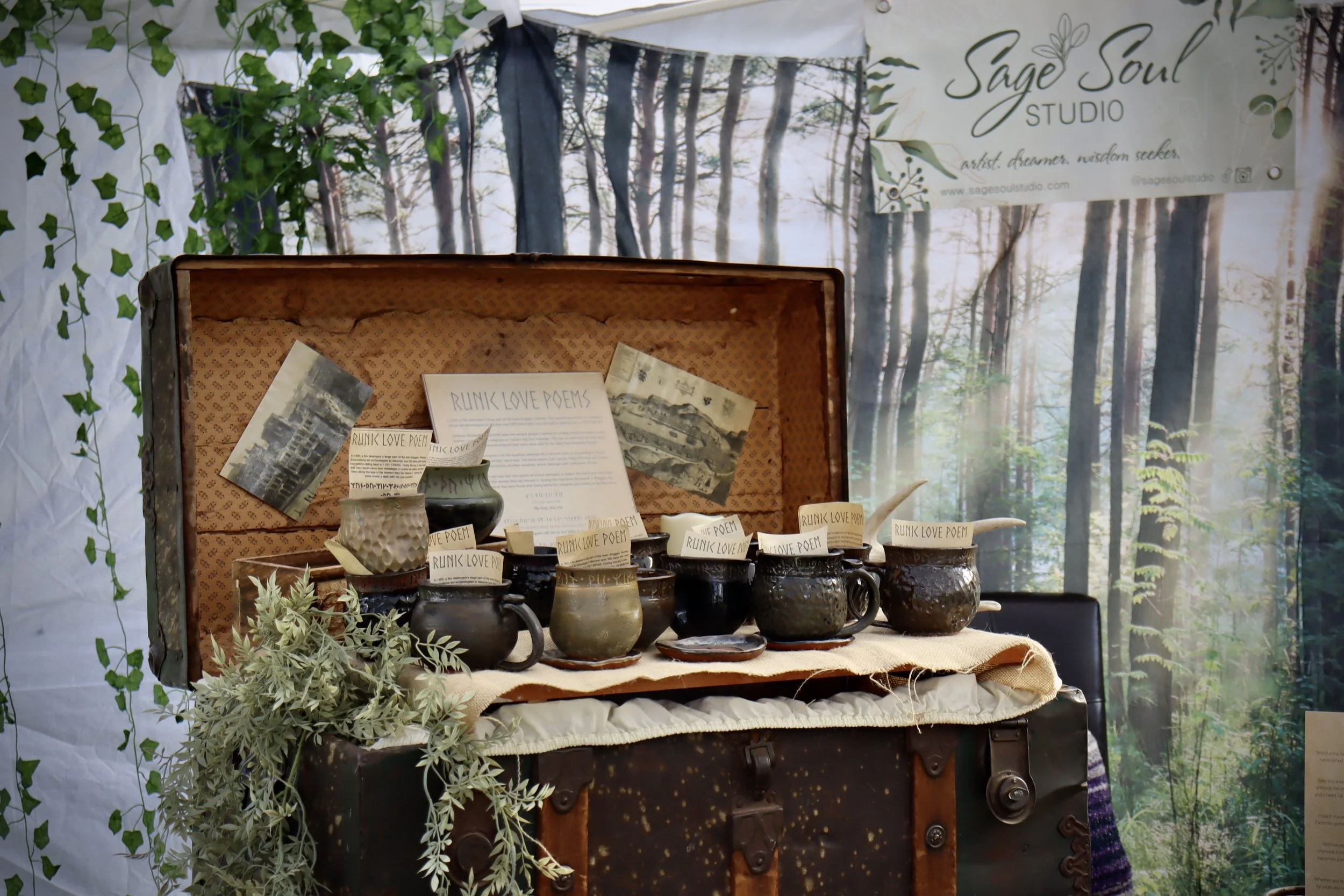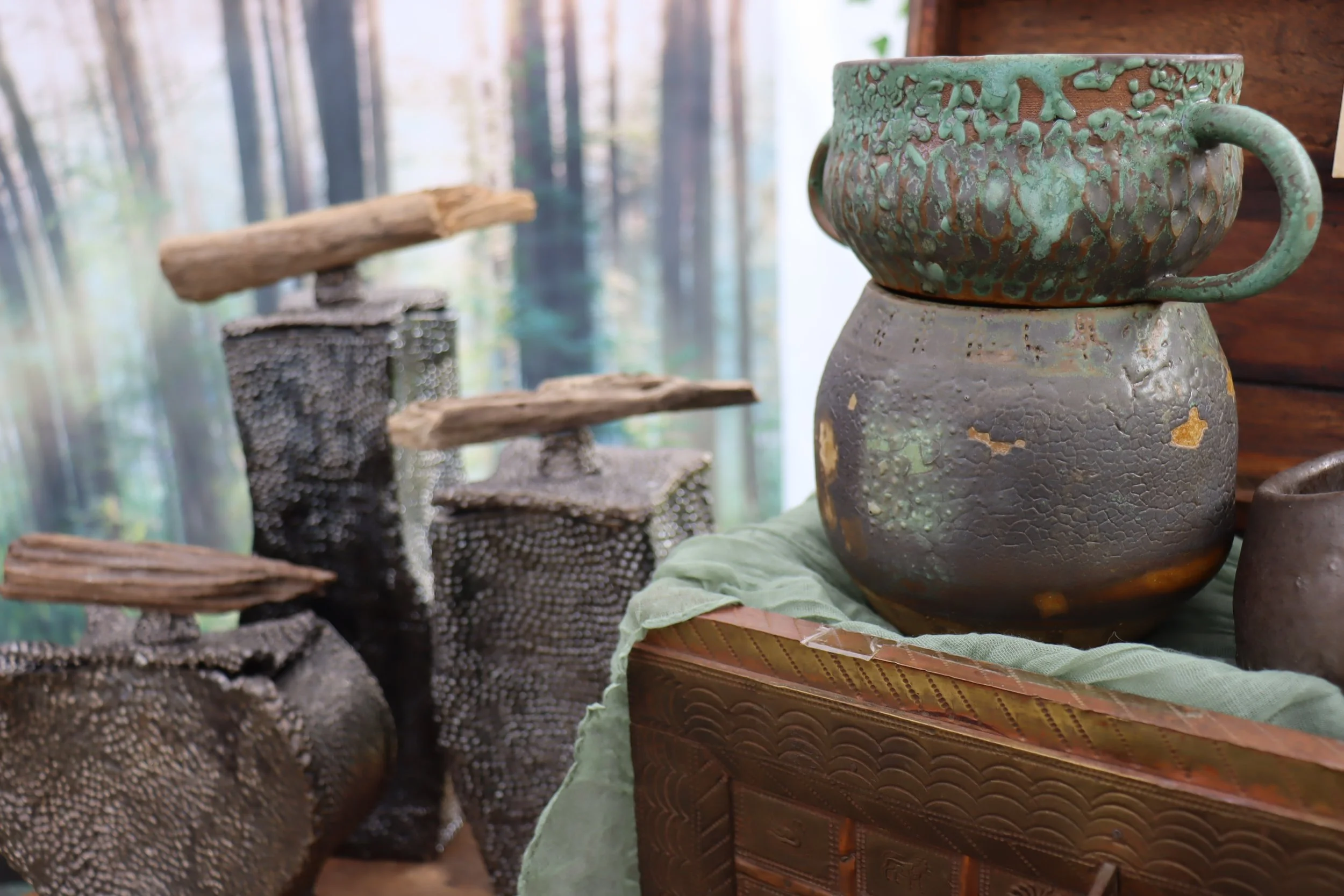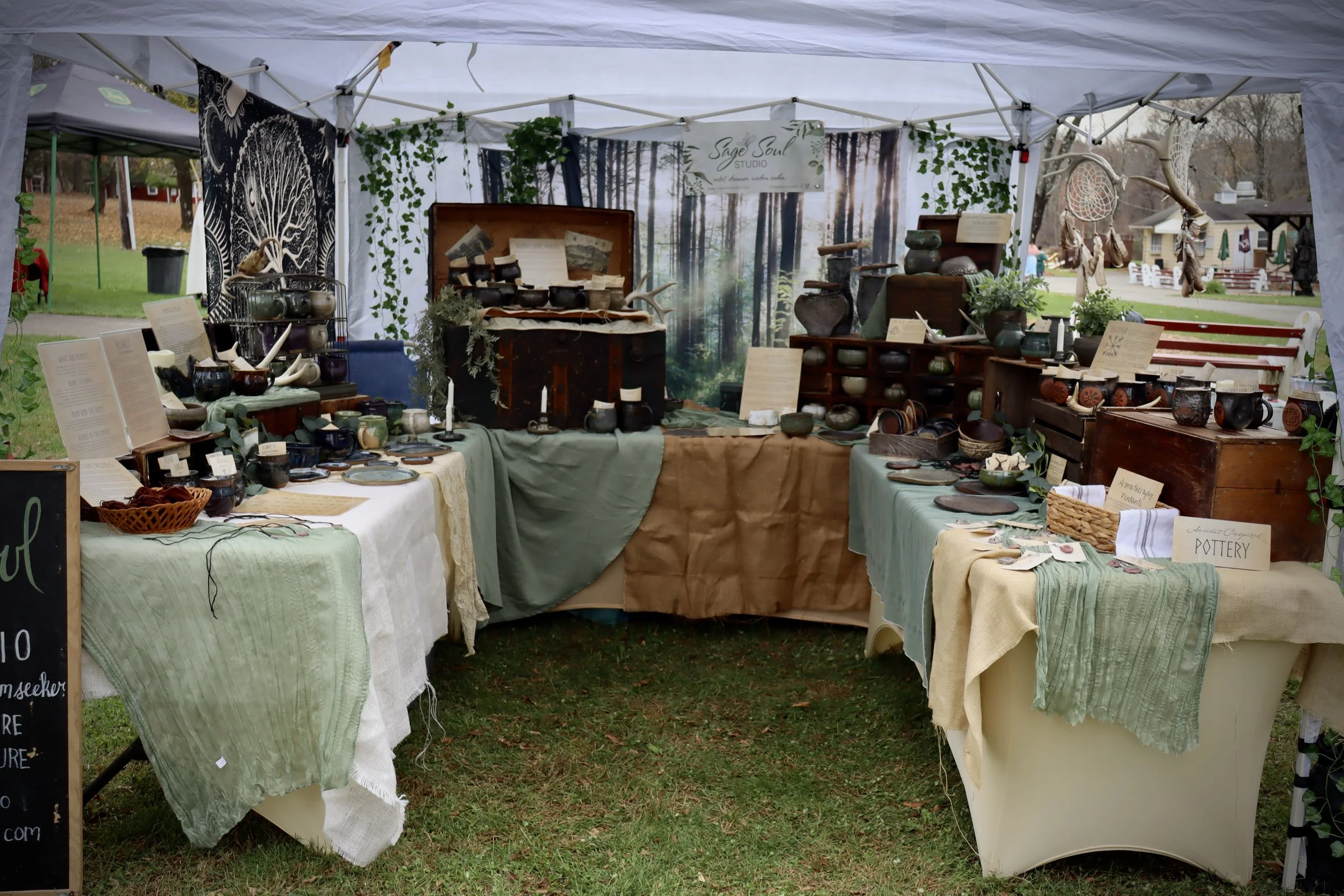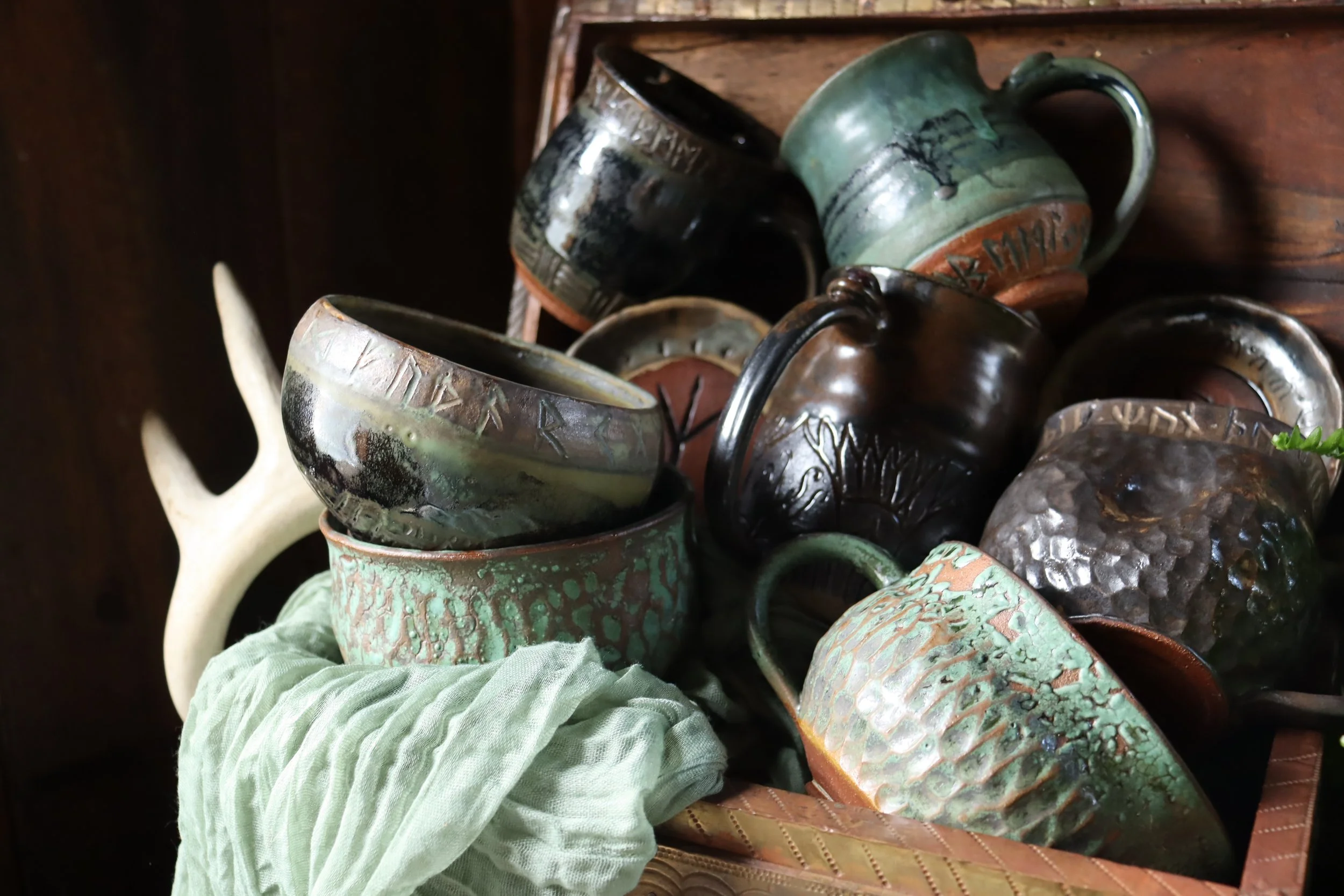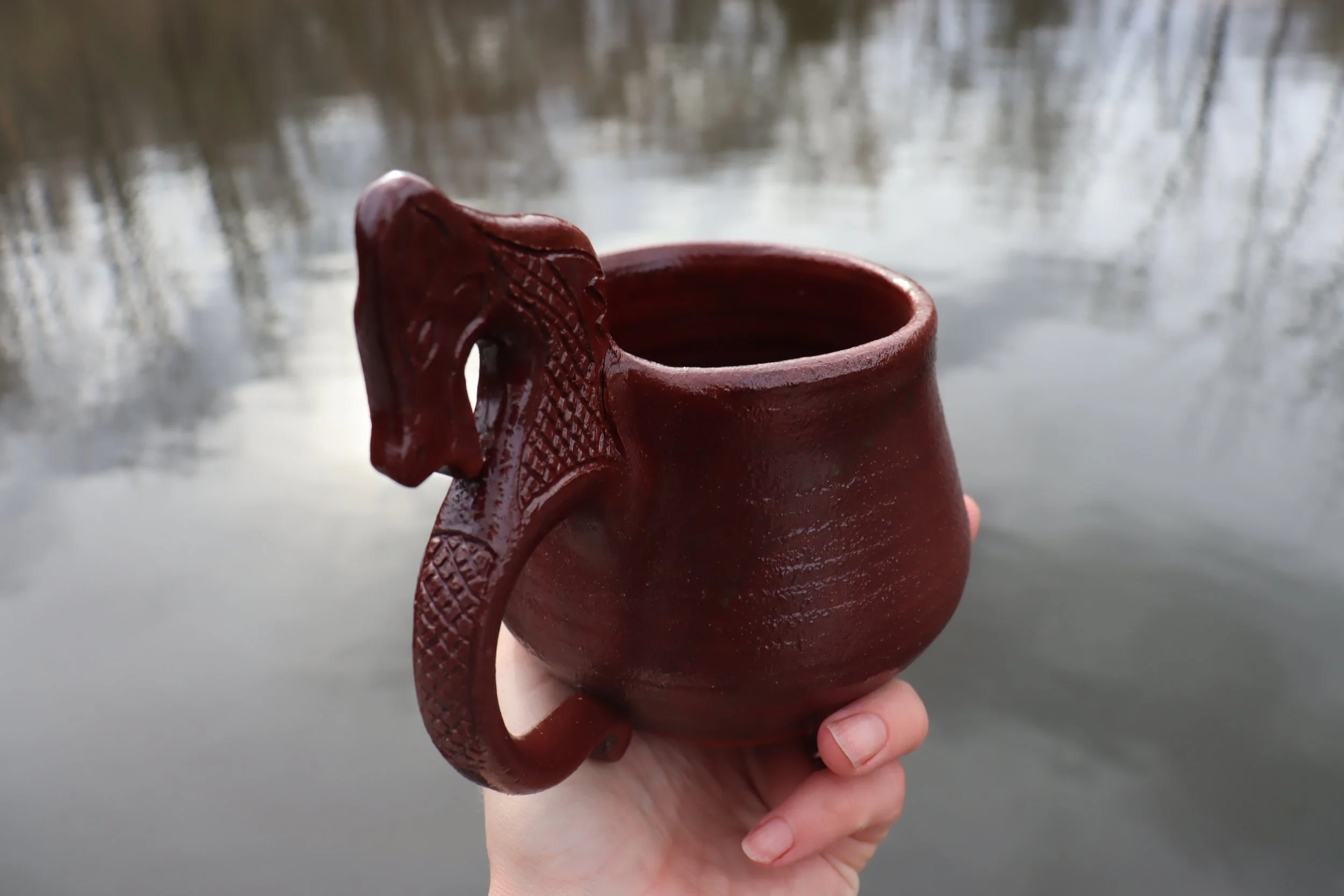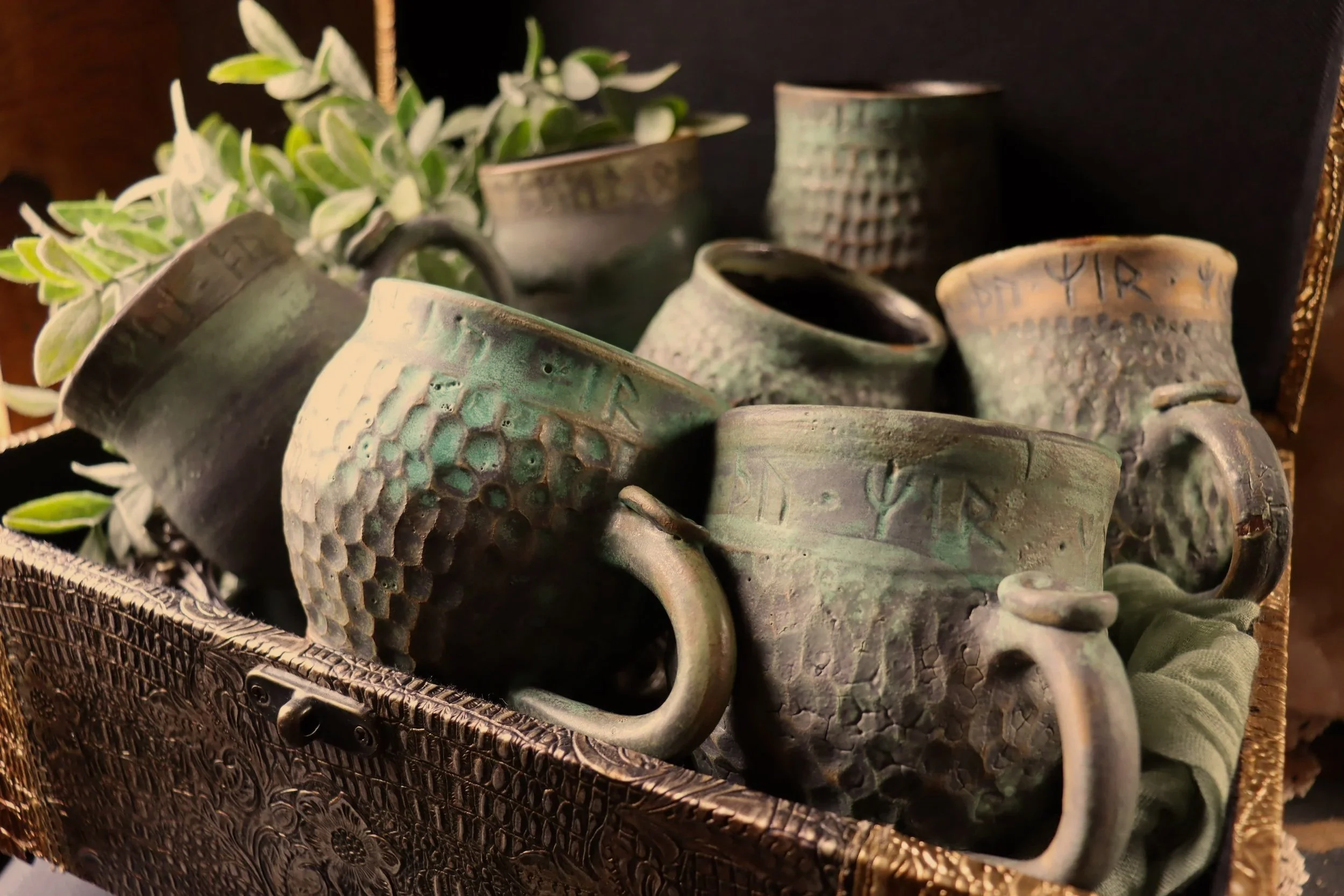
Ancient-inspired Collection
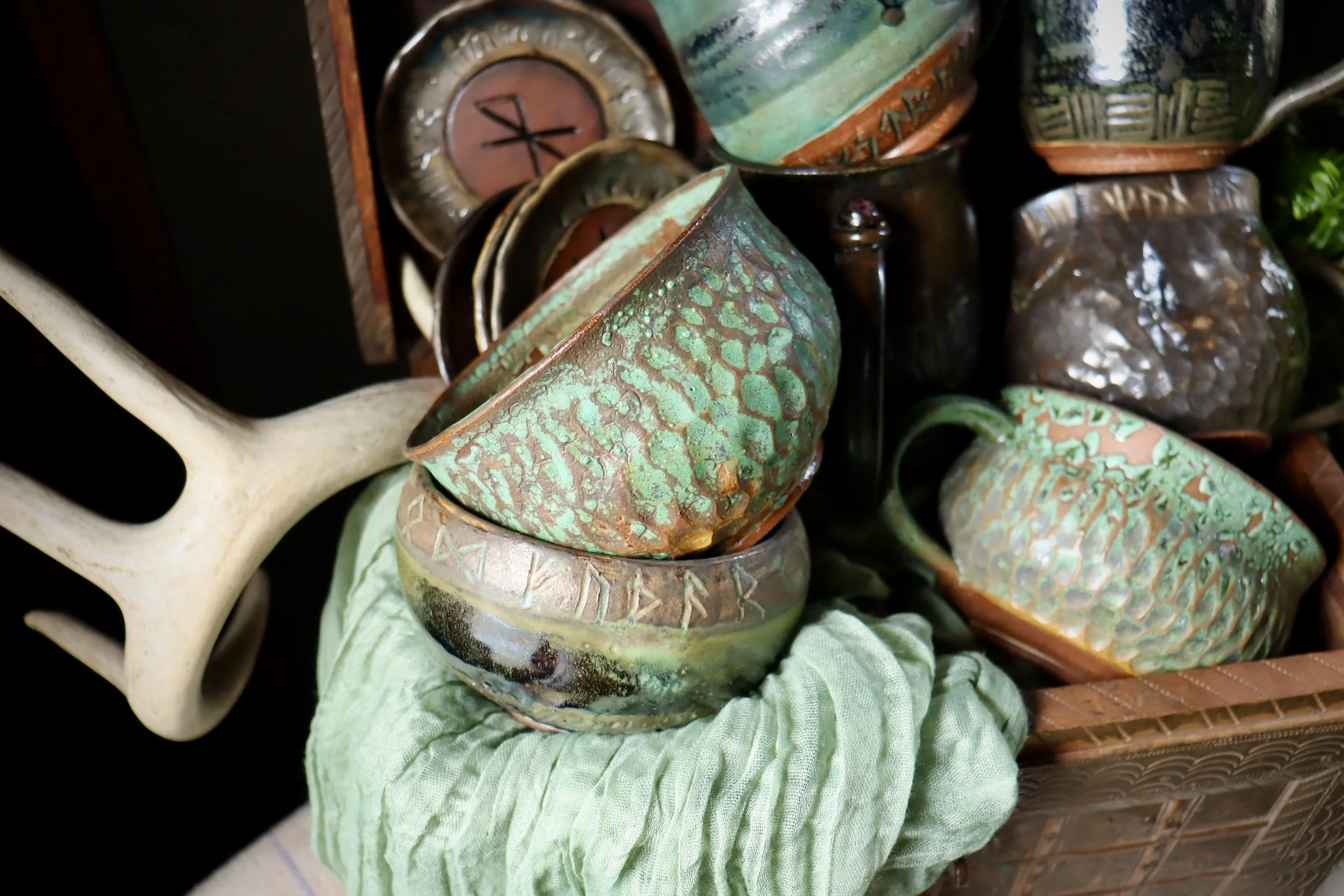
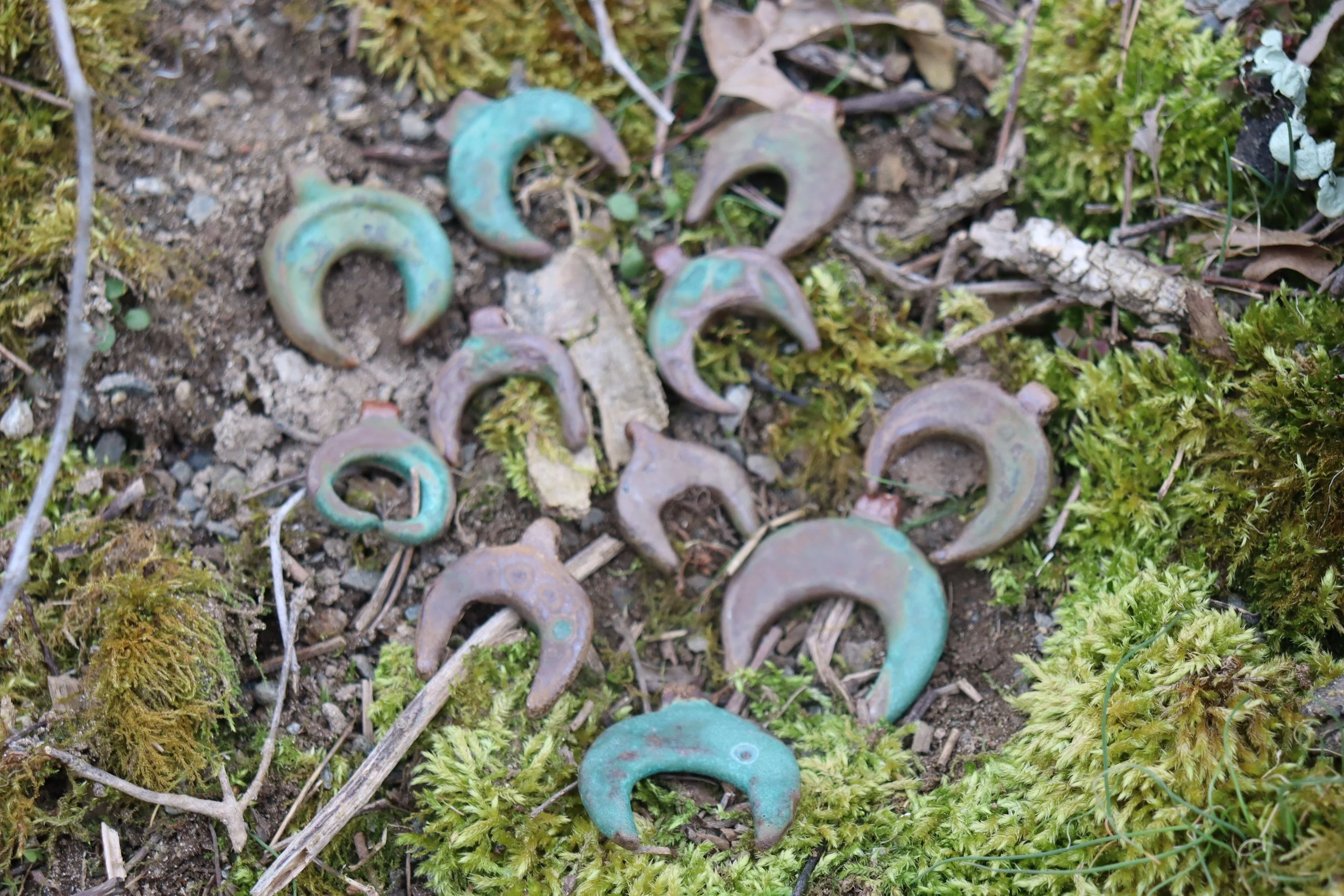
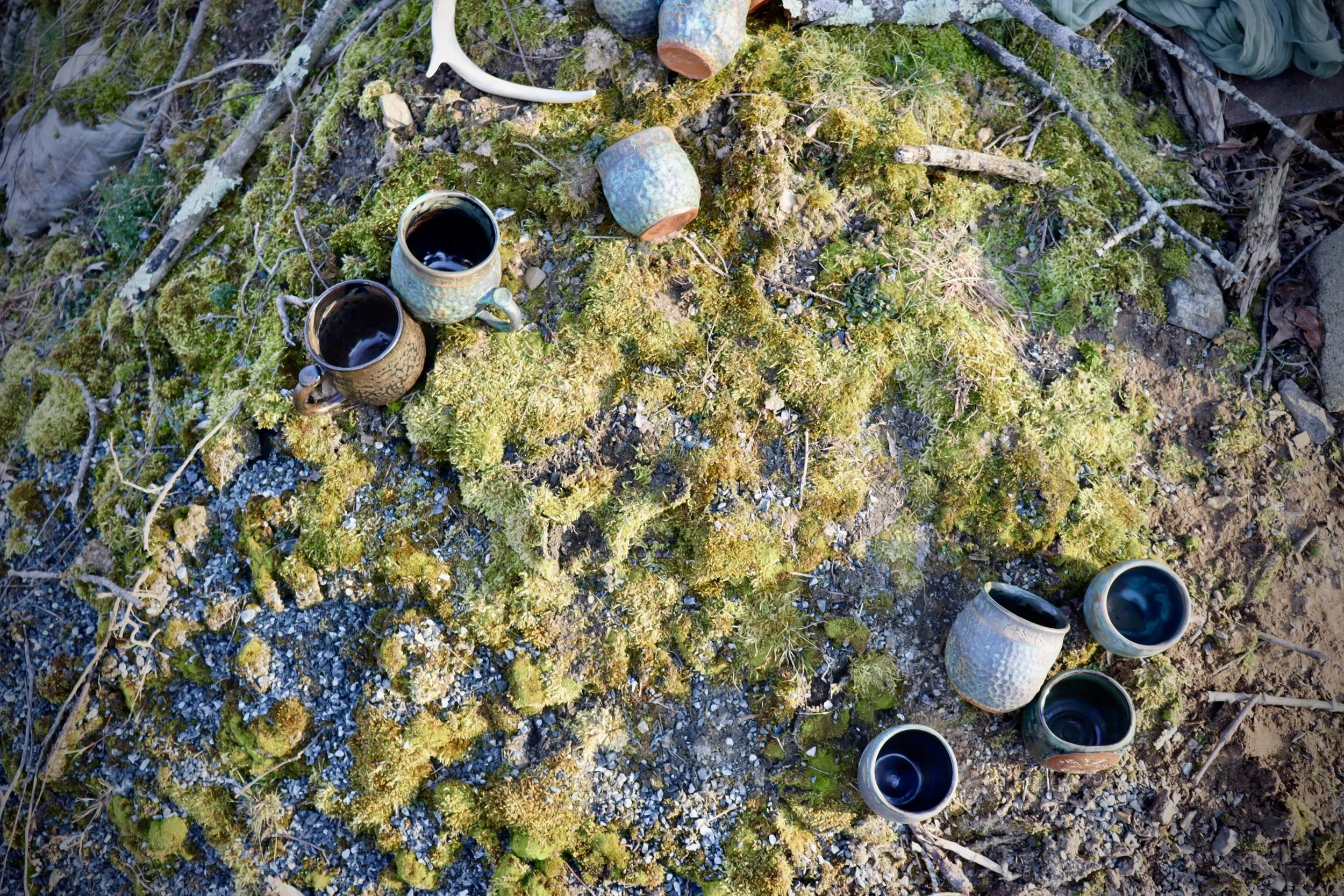
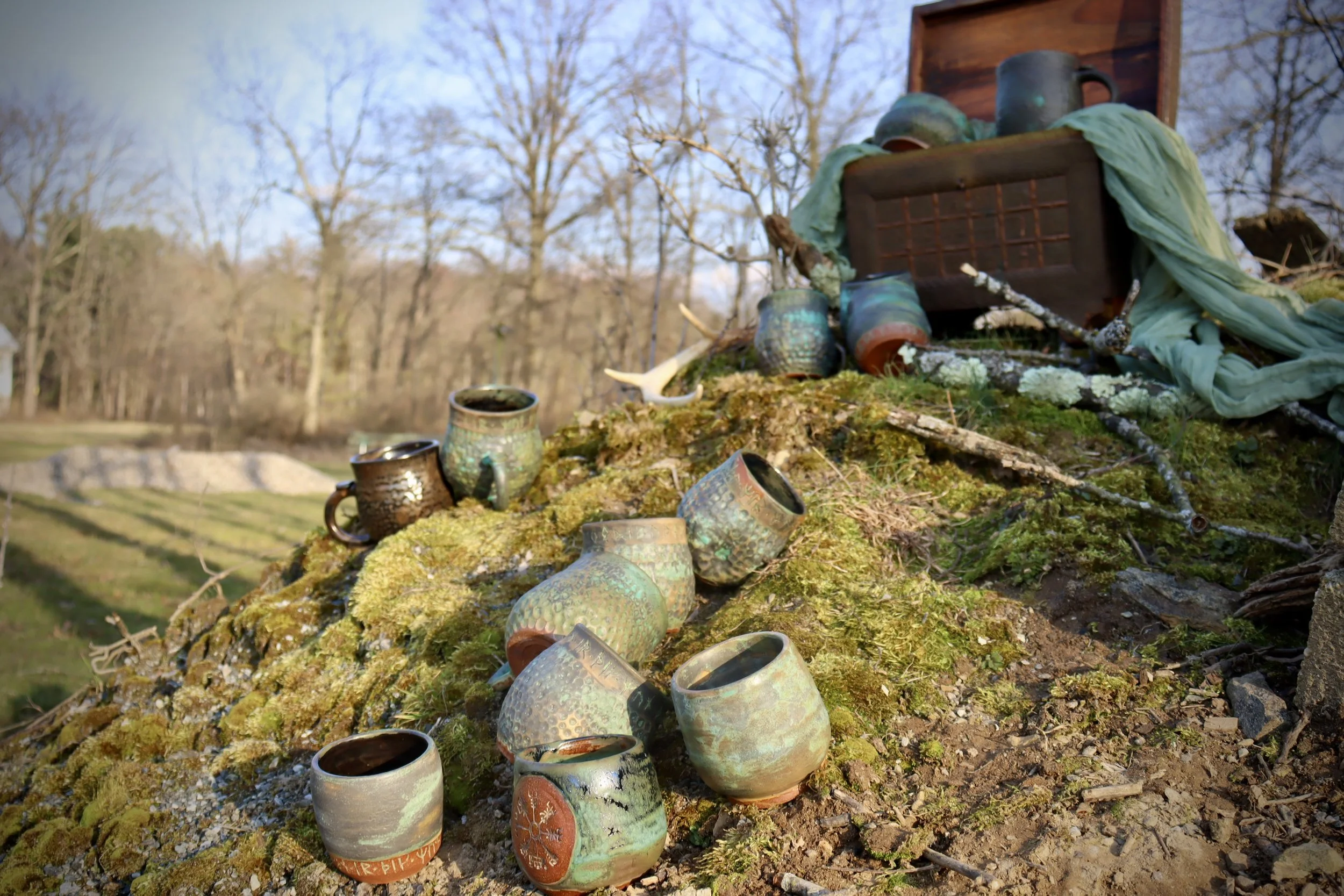
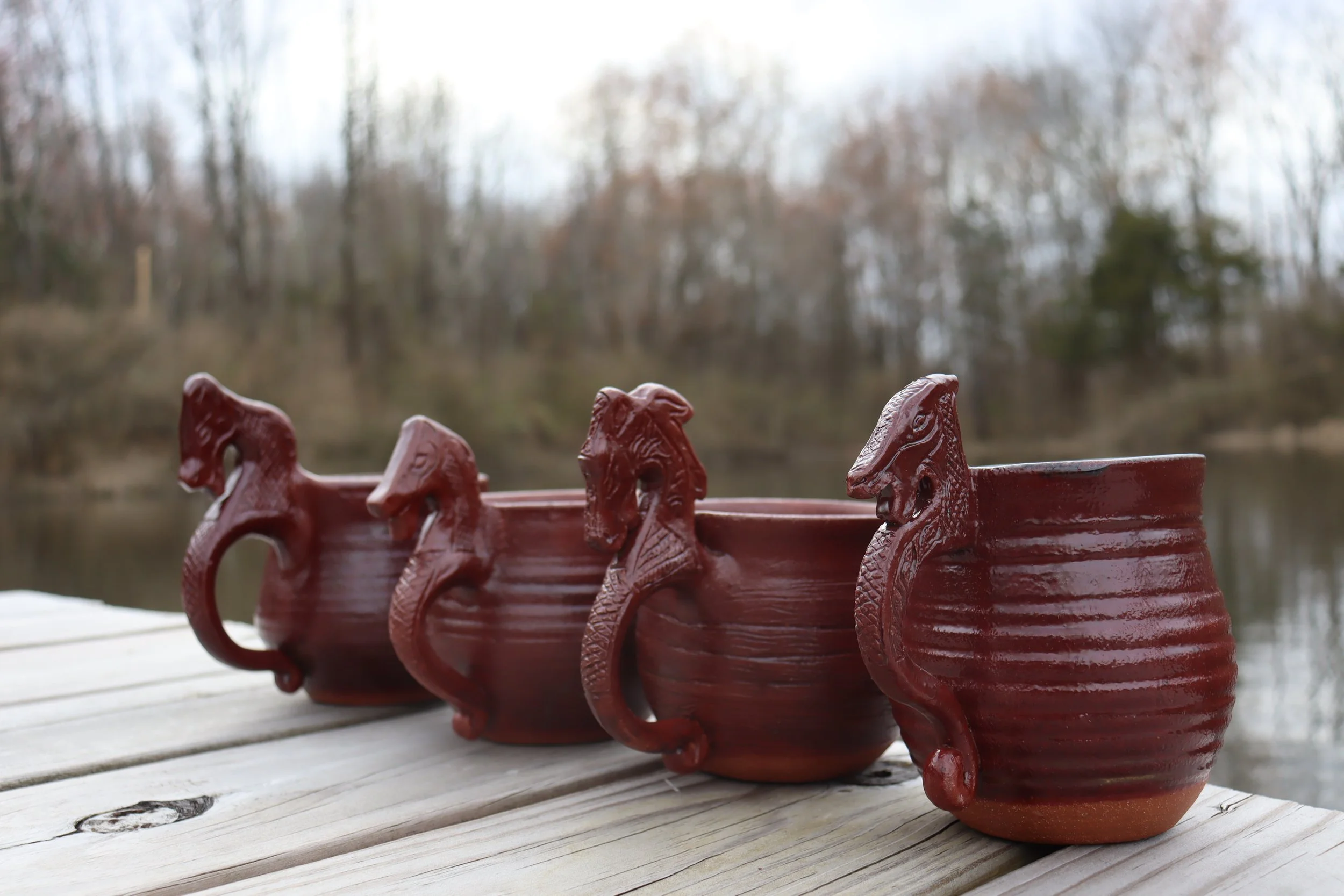
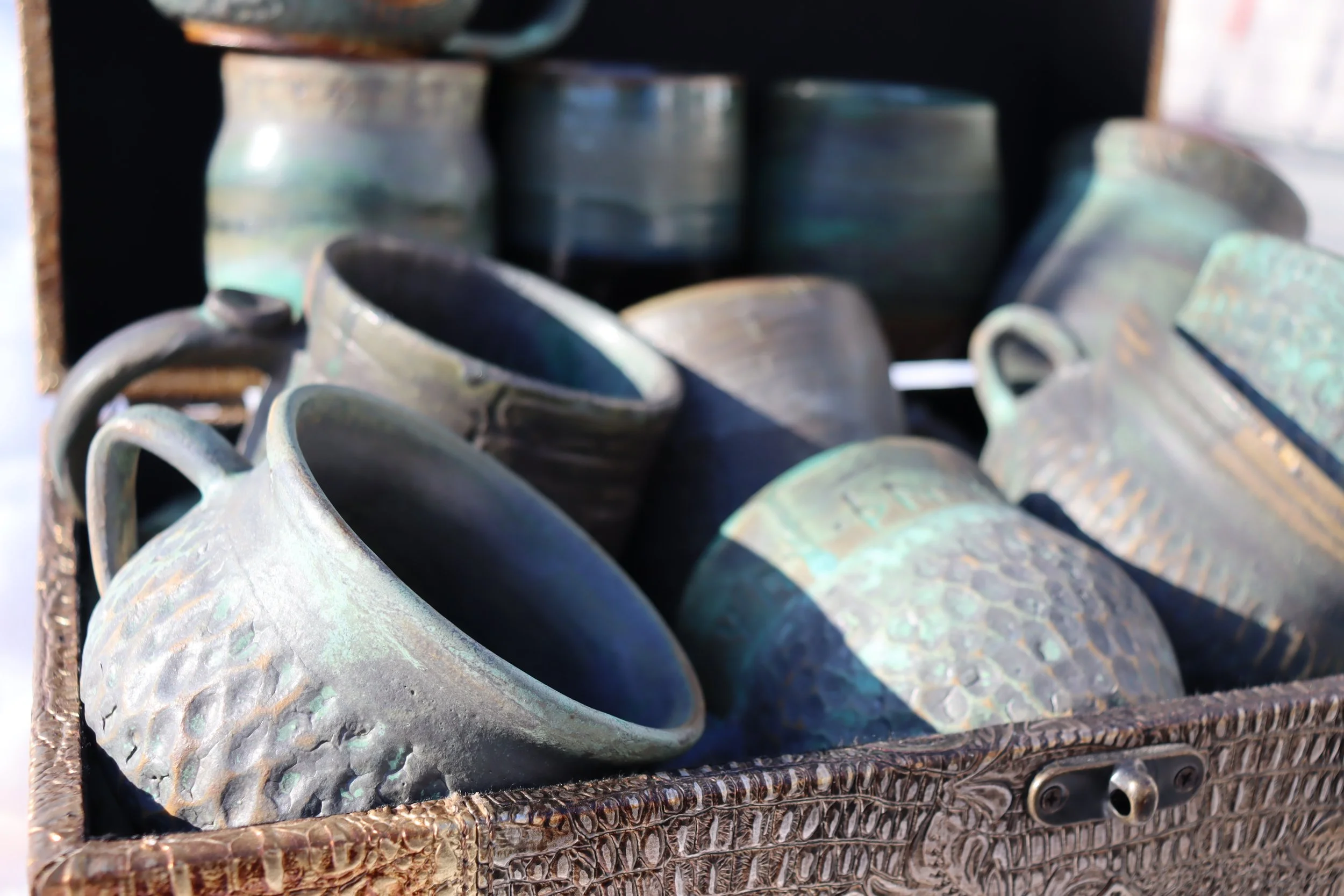
Pottery inspired by Nordic, Icelandic & Celtic archaeological findings; Intended to look ancient, weathered & worn. Mysteries left to the hands of time.
Hidden beneath the Earth for centuries… just waiting to be found.
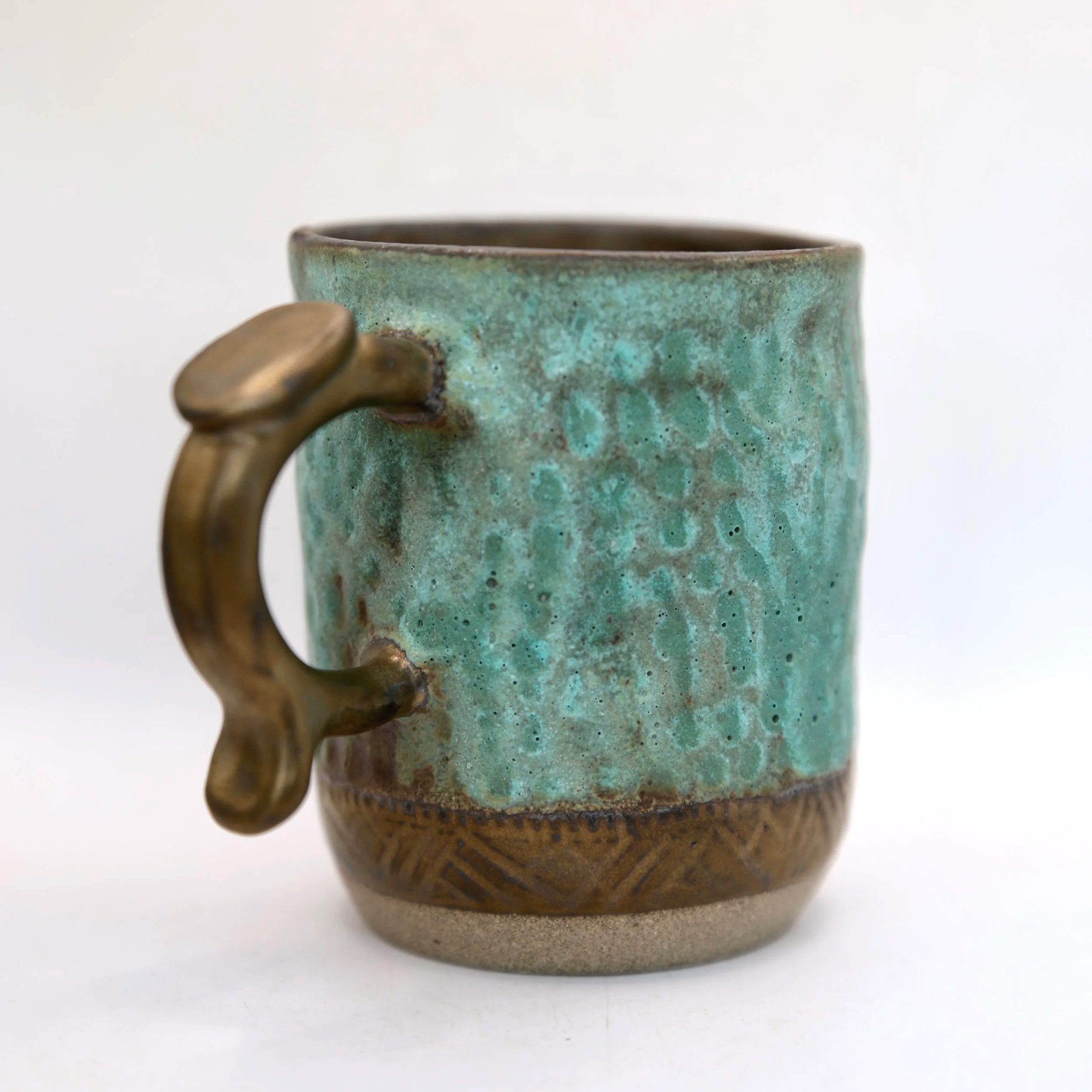
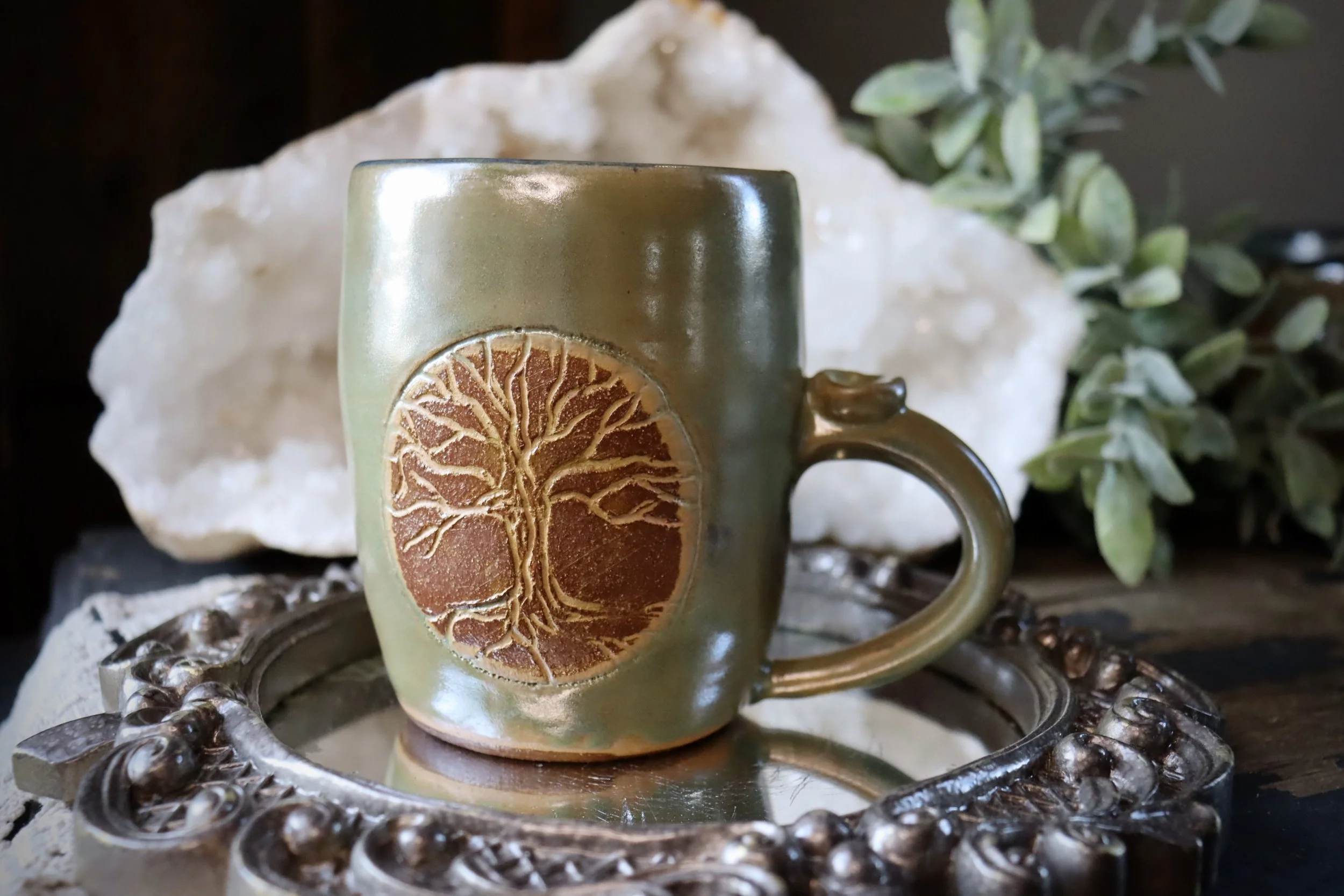
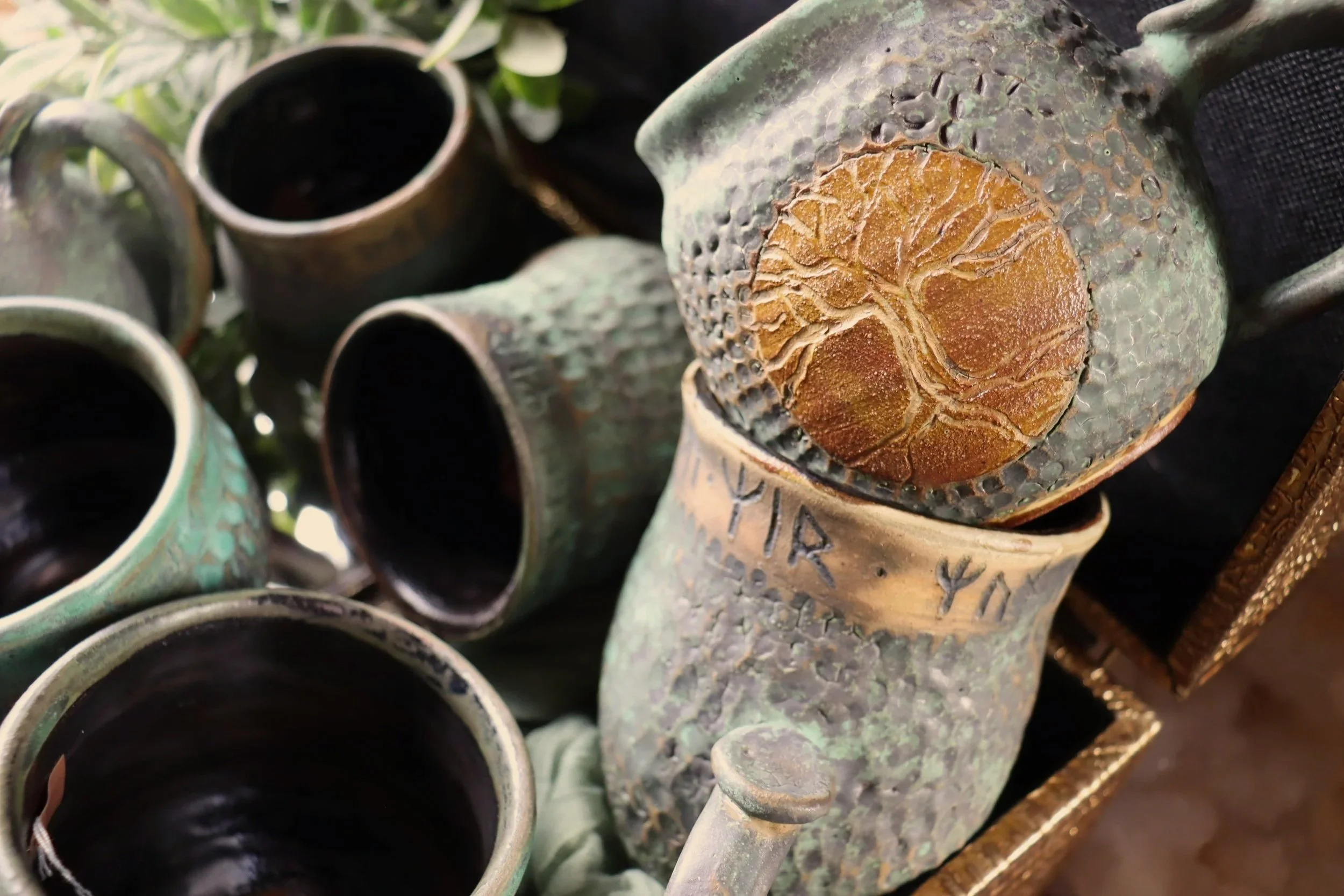
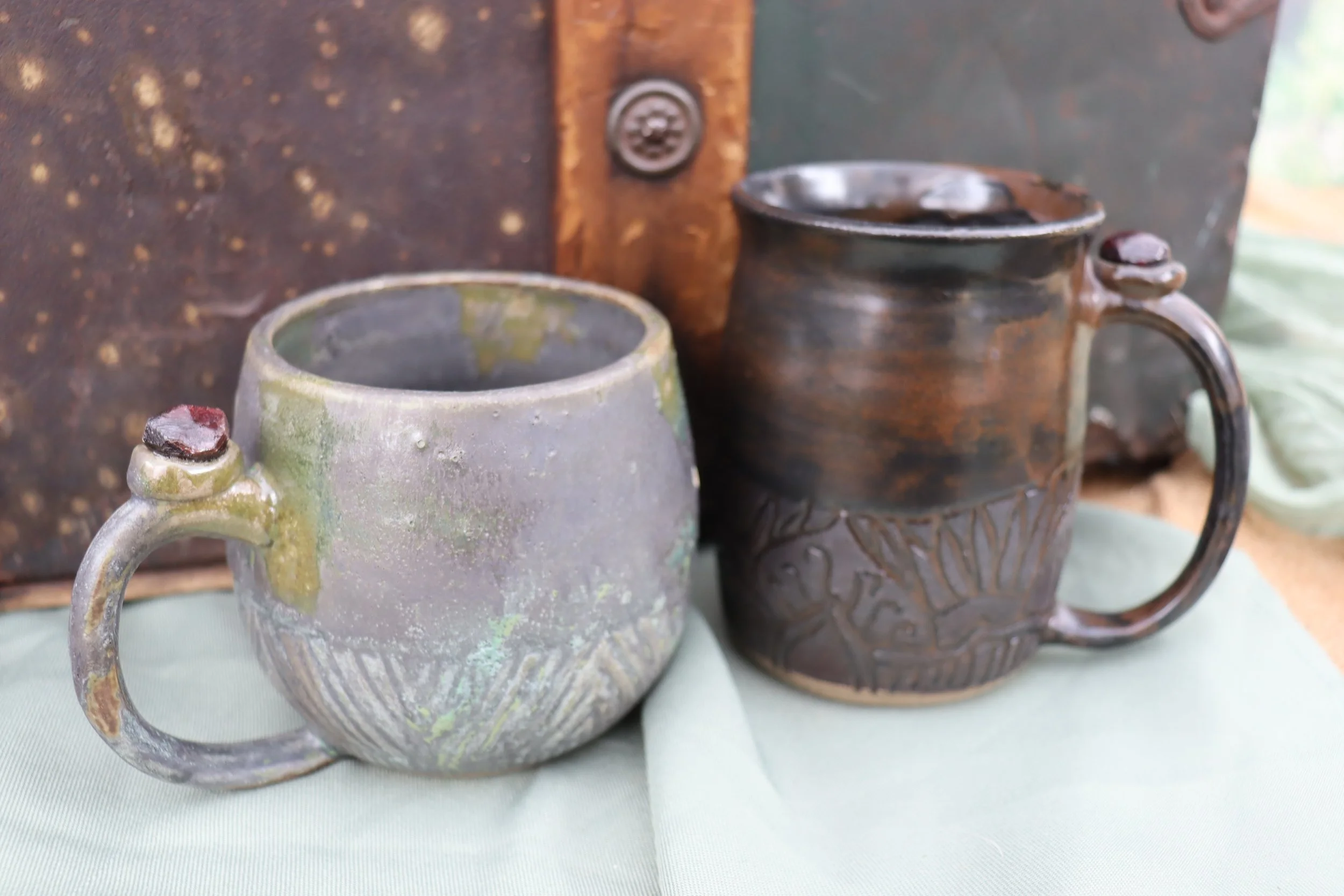
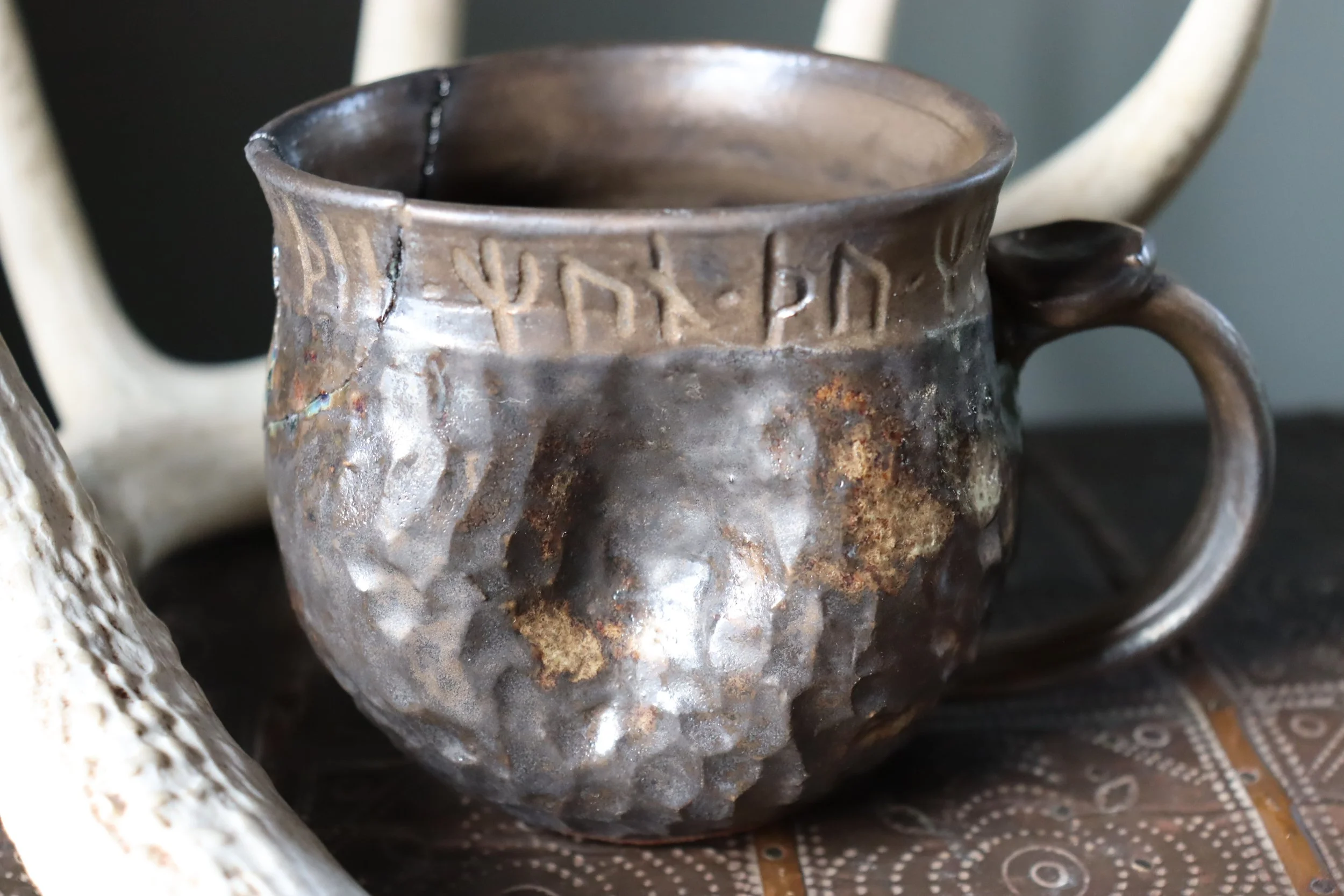
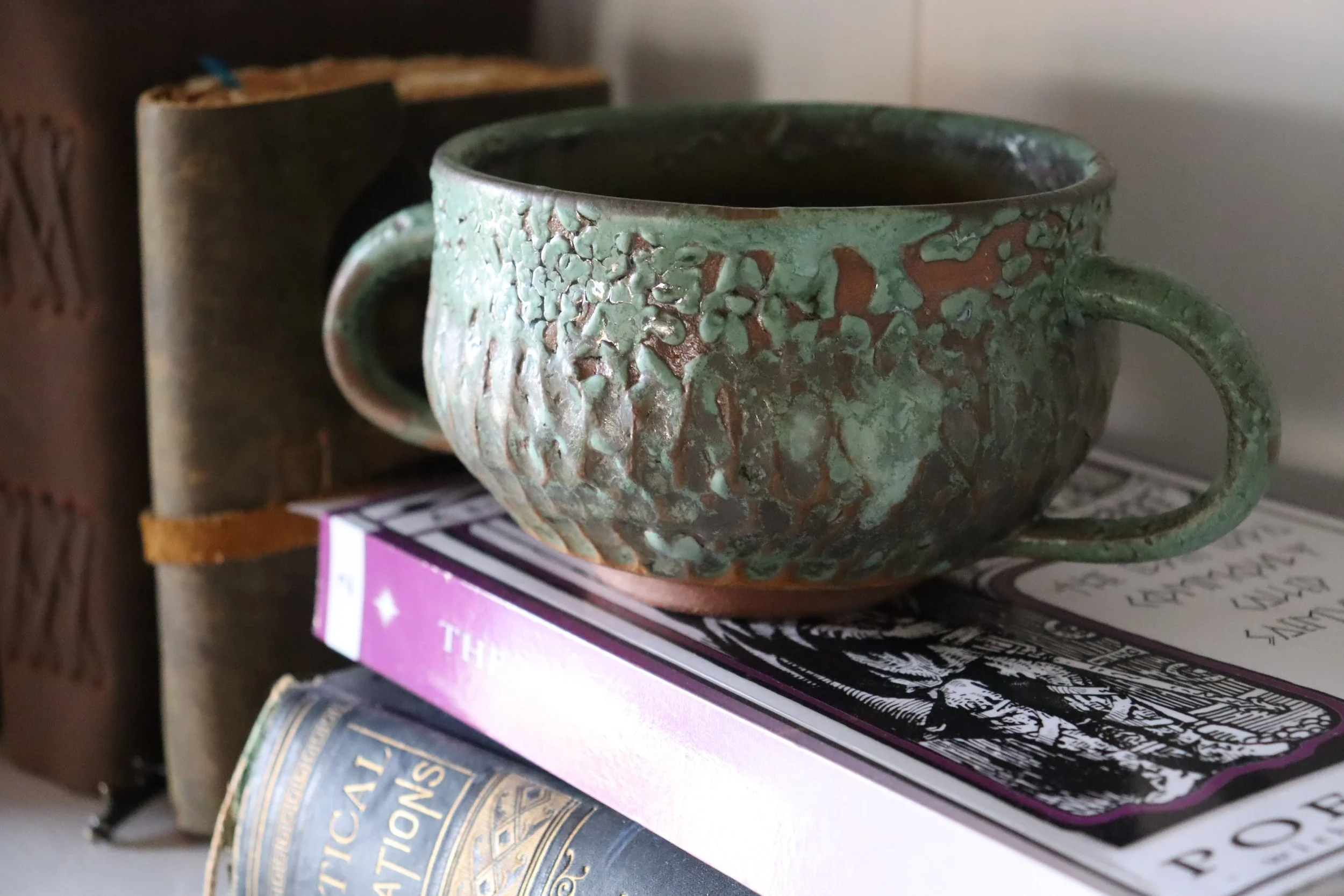
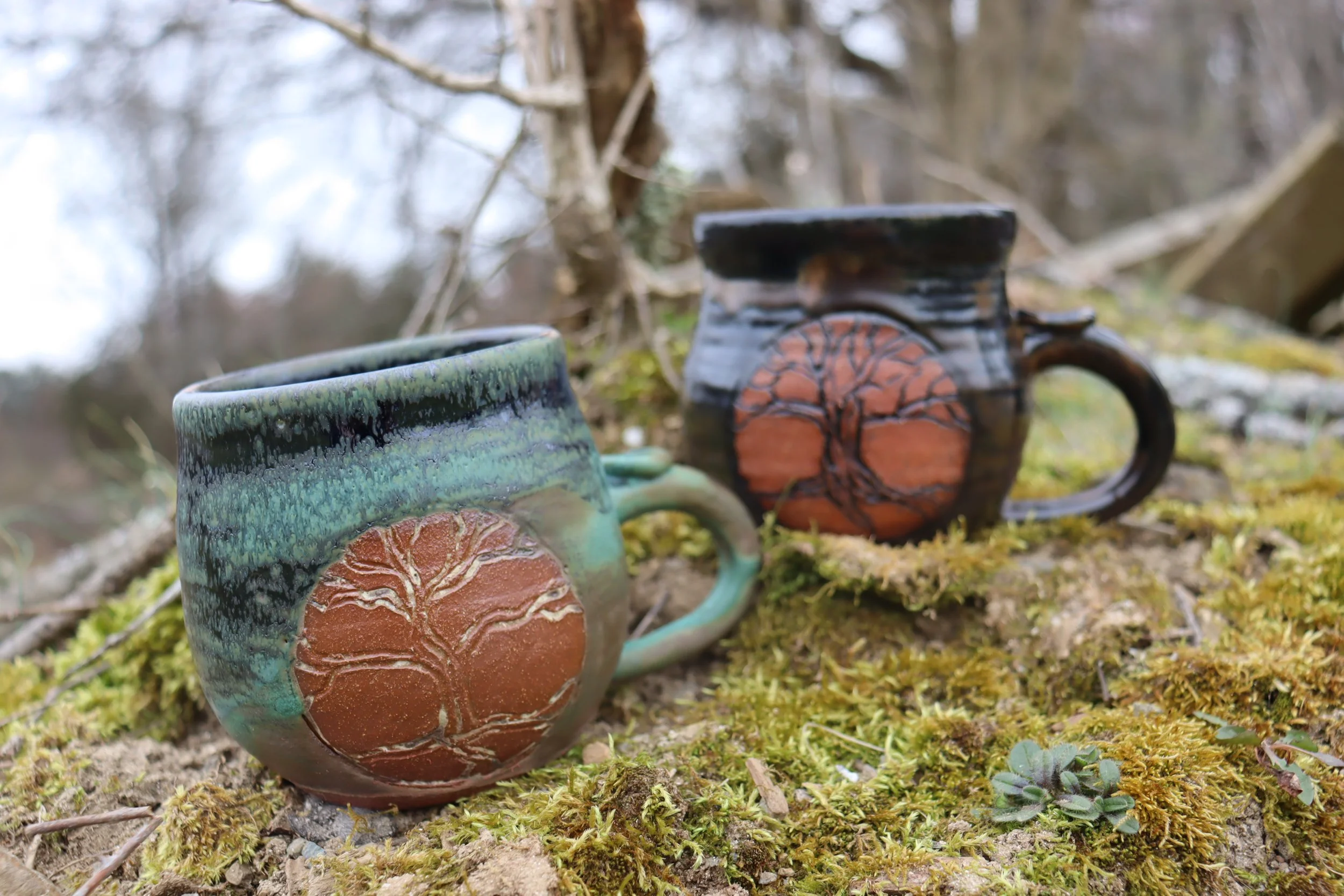
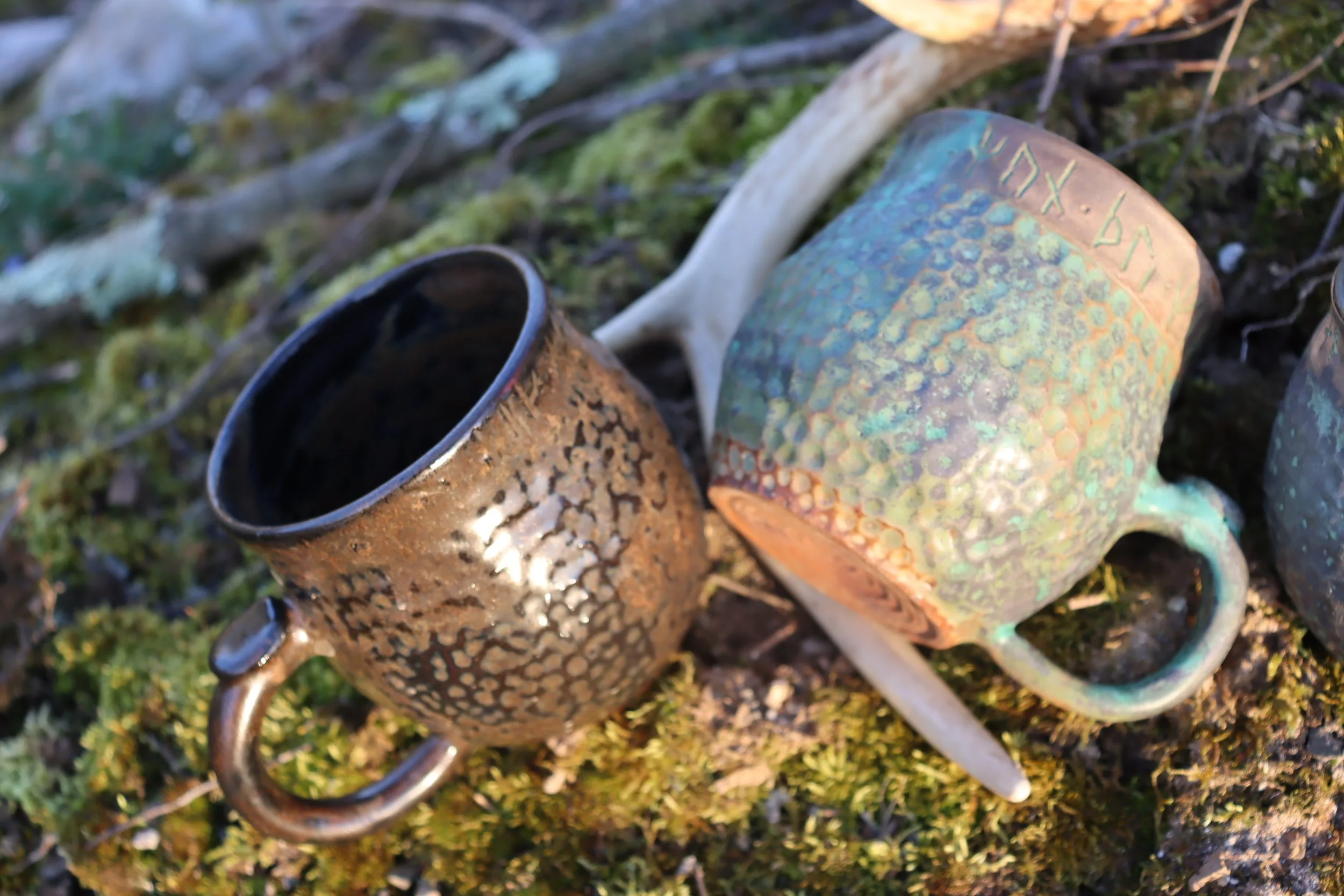
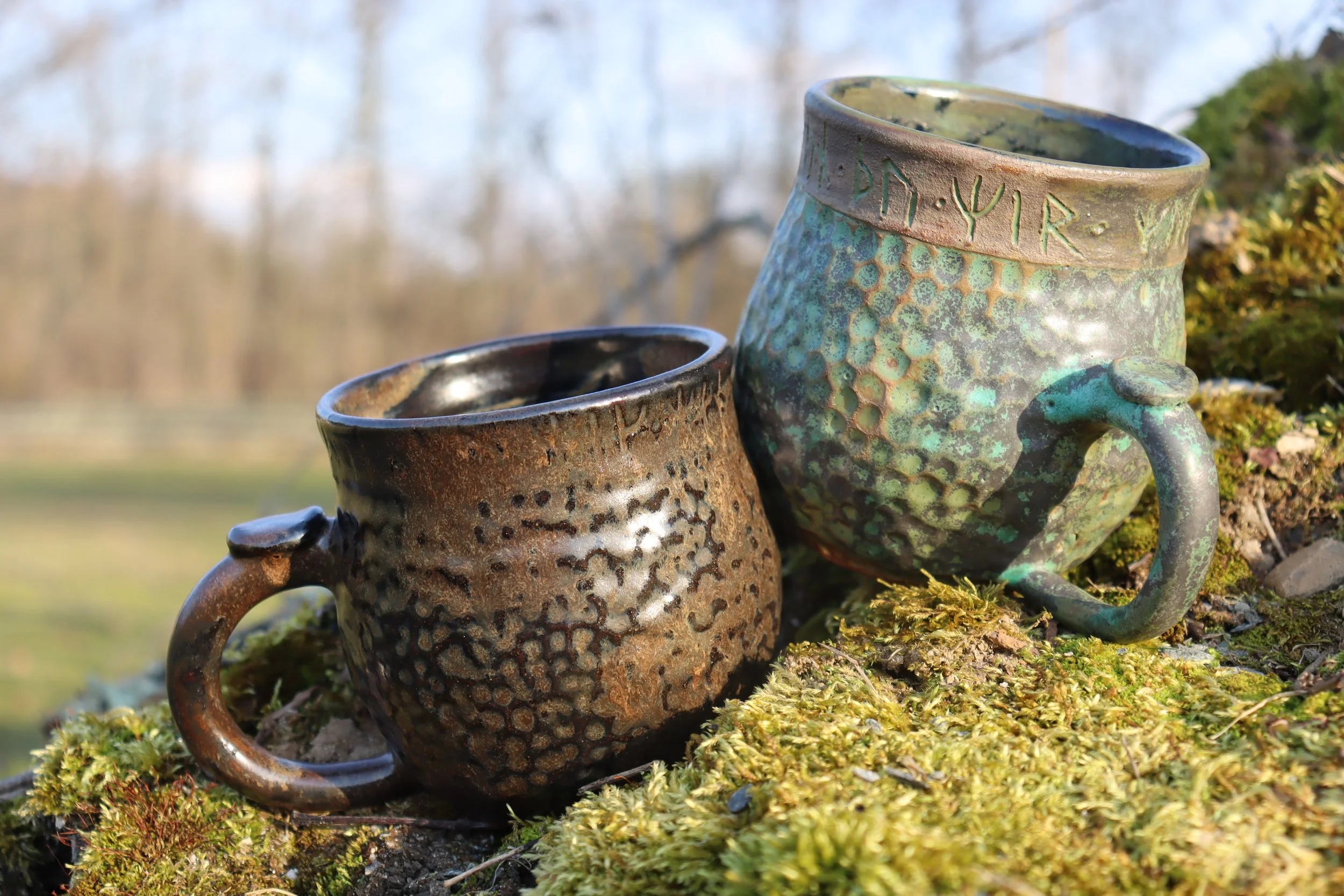
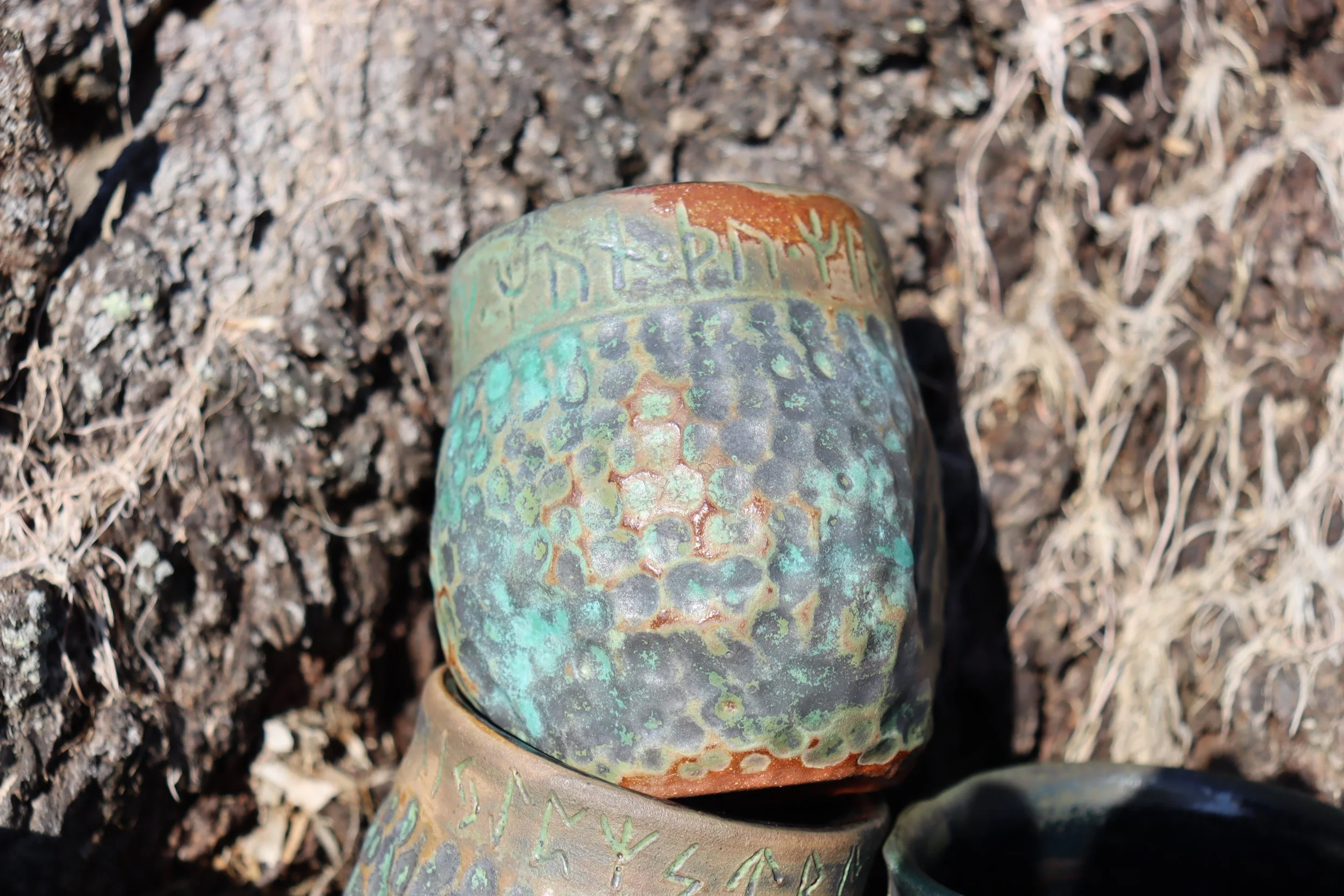
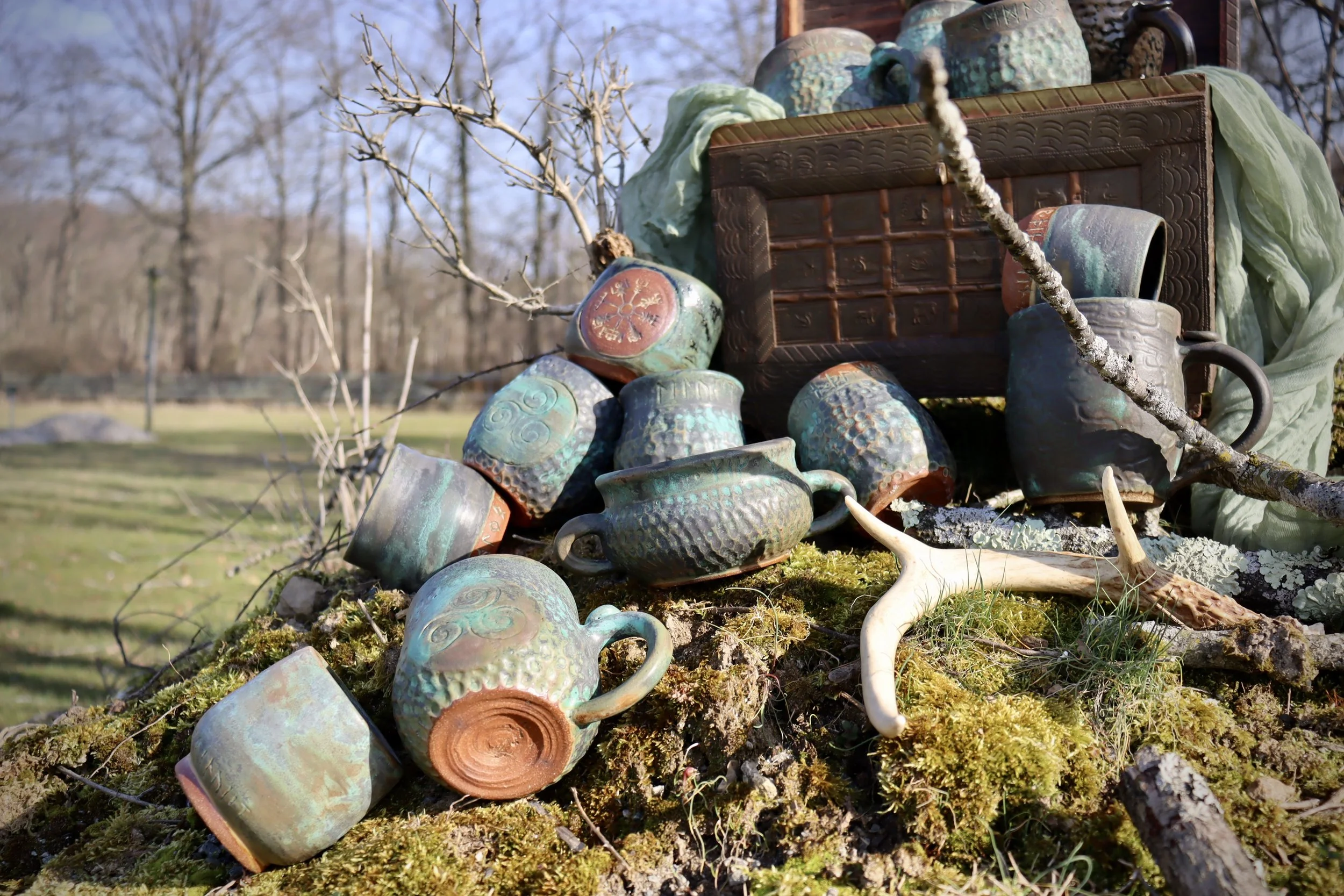
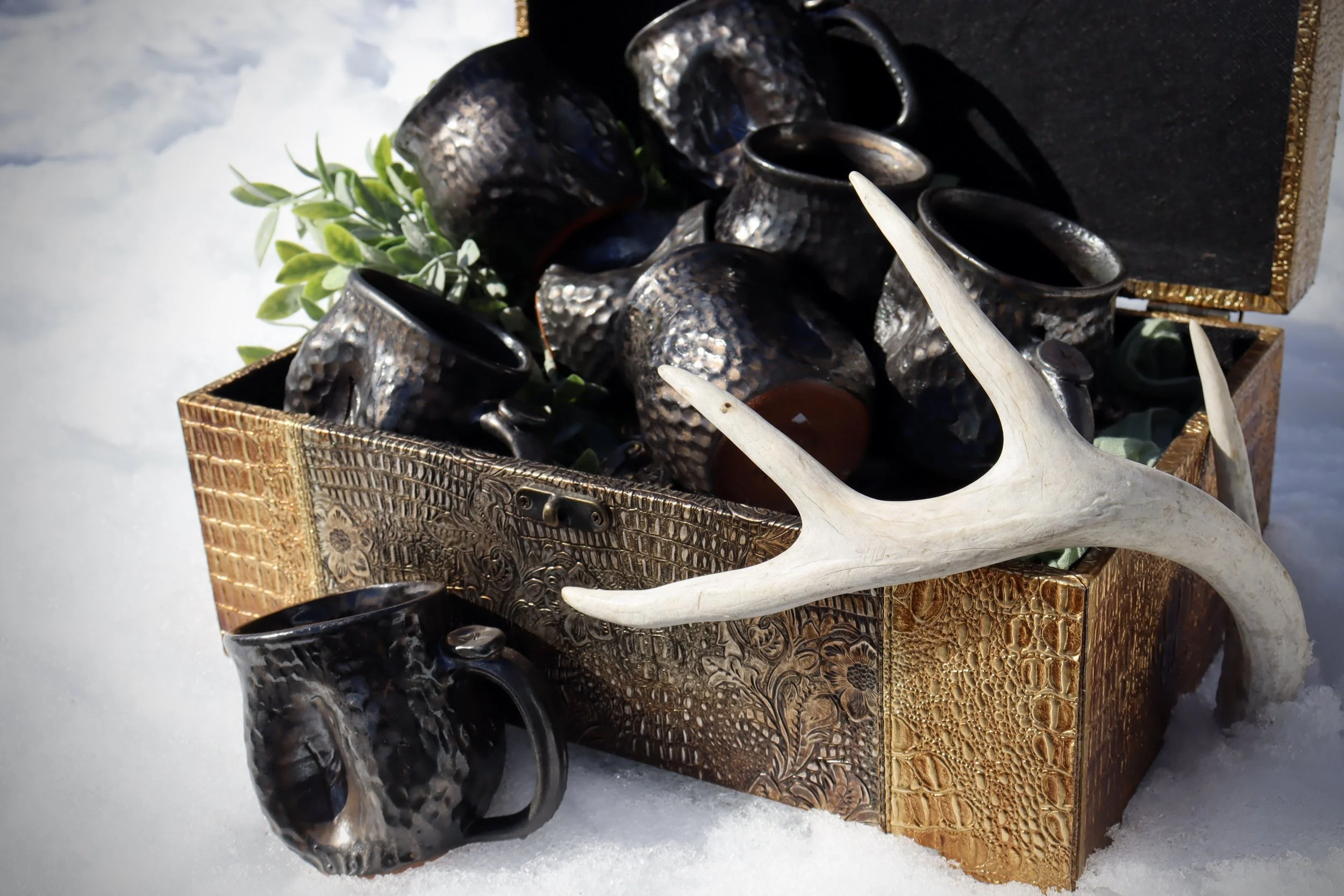
12oz handmade mug with ‘Hammered-copper’ texture and patina glaze.
Each mug is crafted to be one of a kind, ensuring that no two are exactly the same—each piece is truly unique!

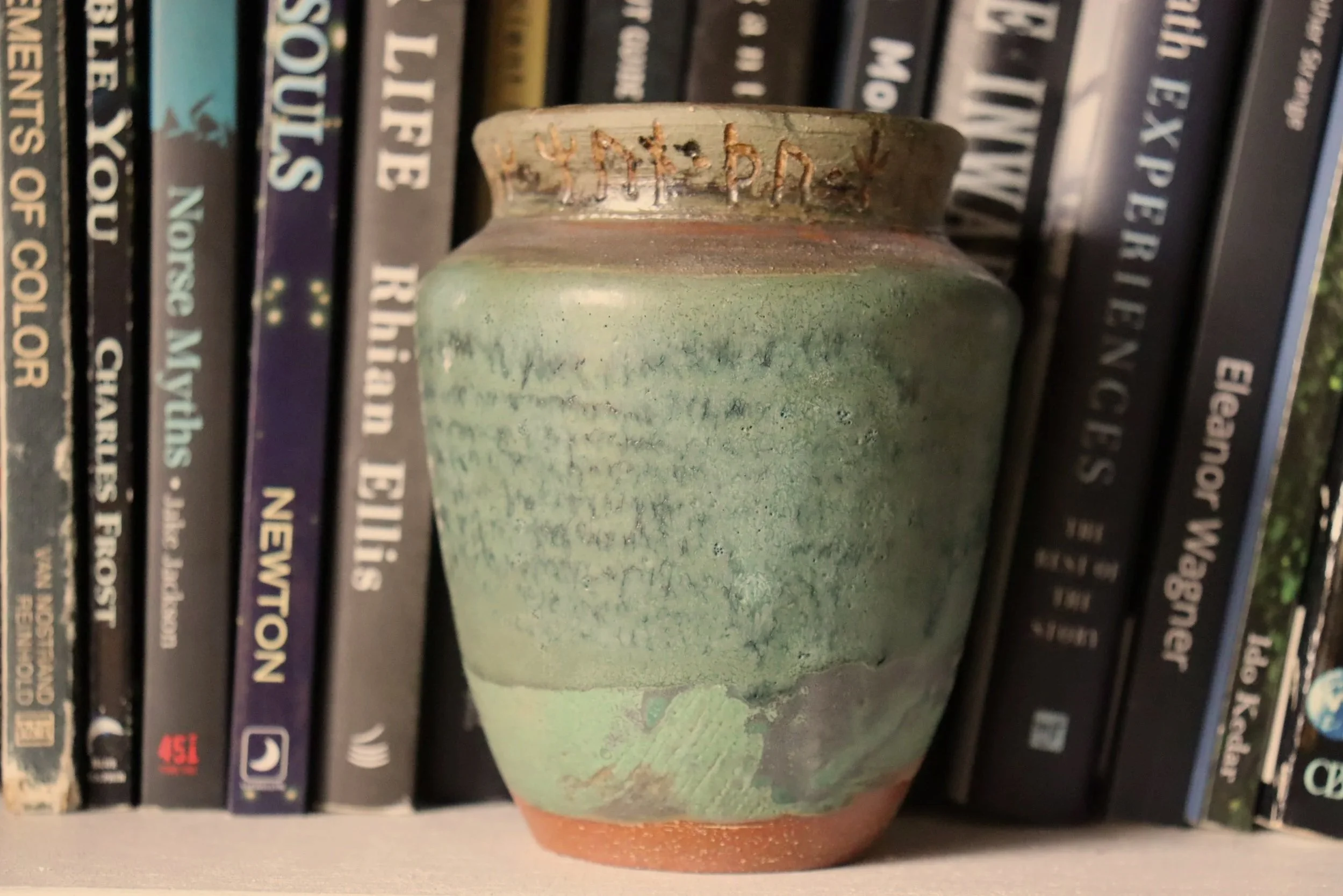
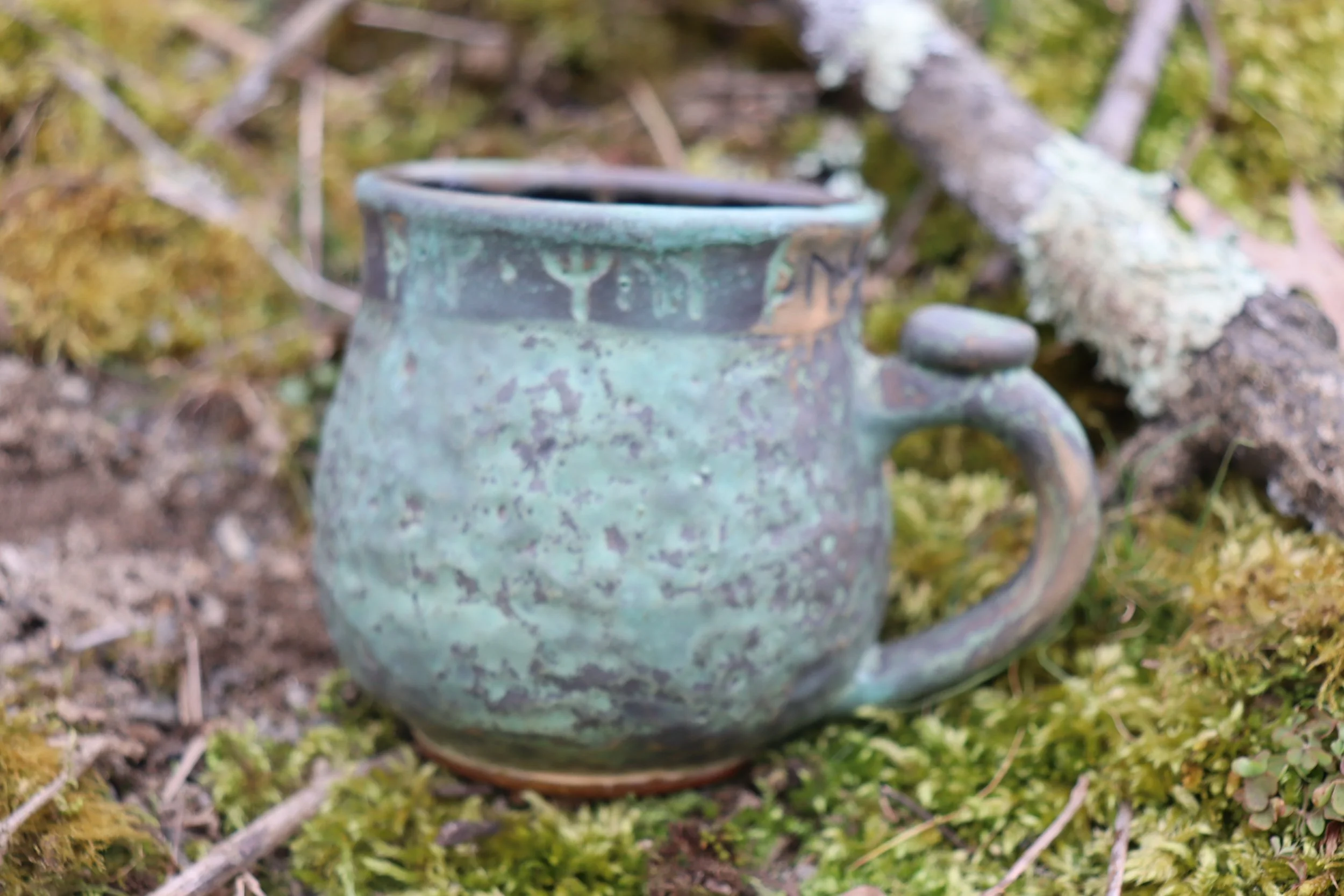
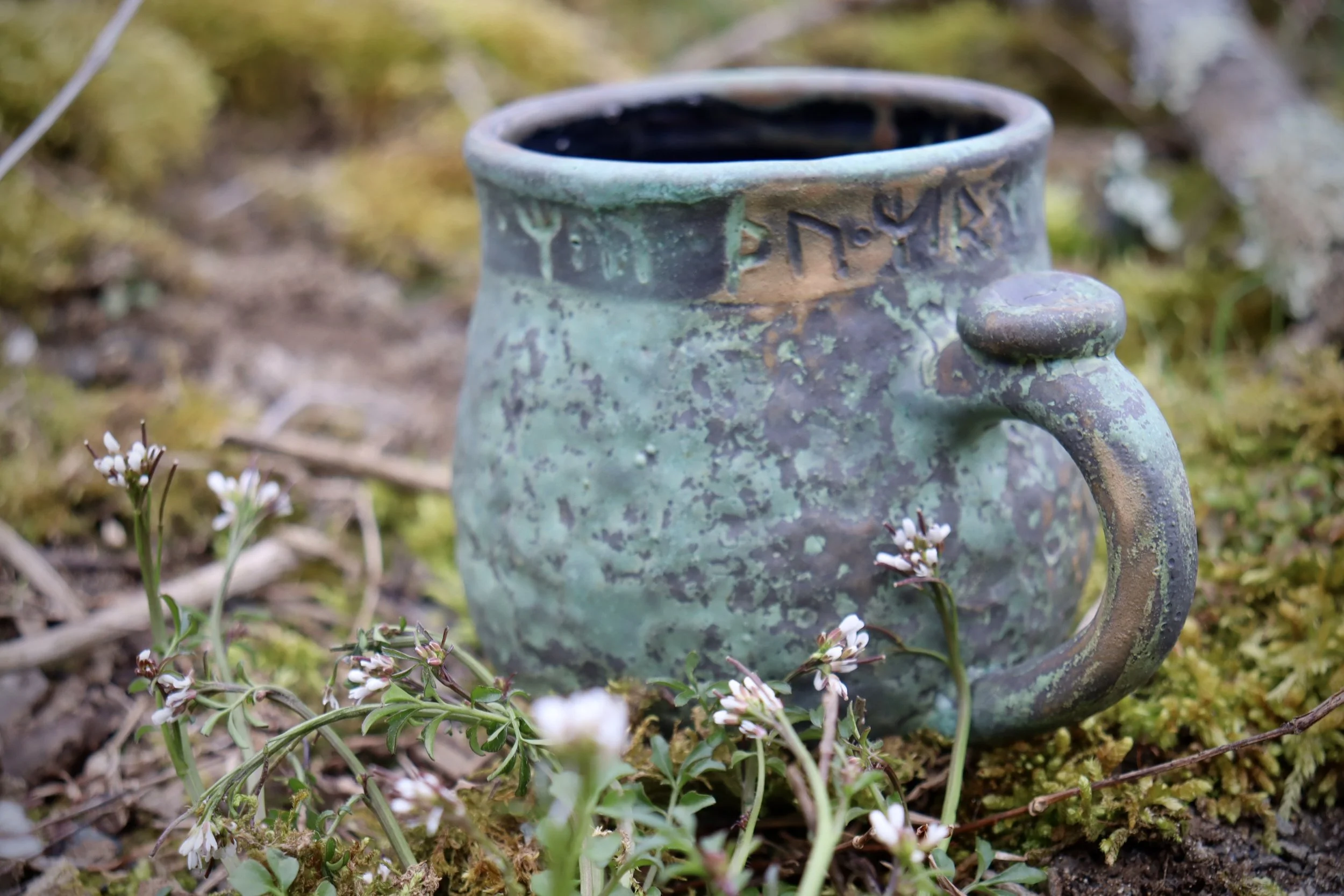
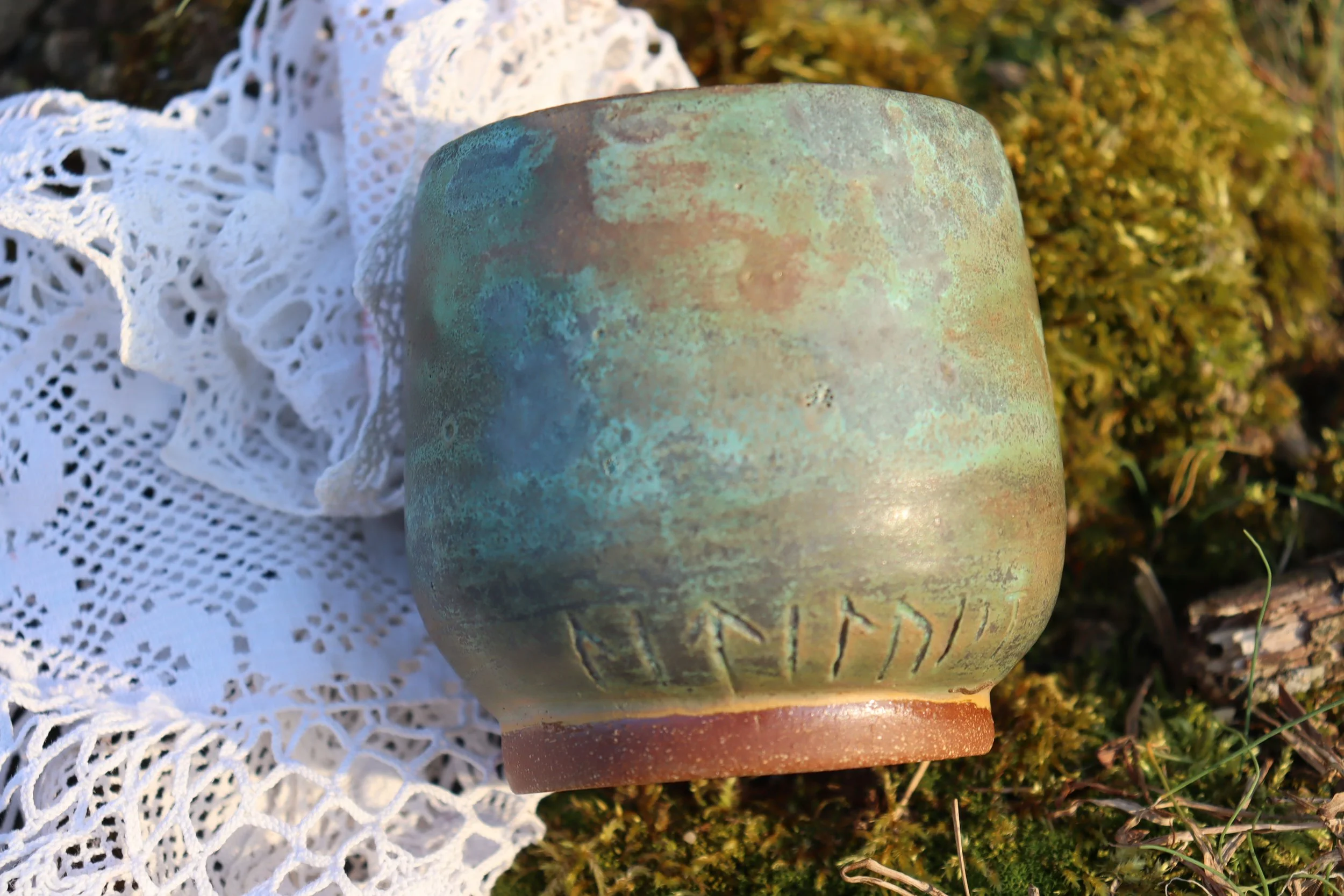
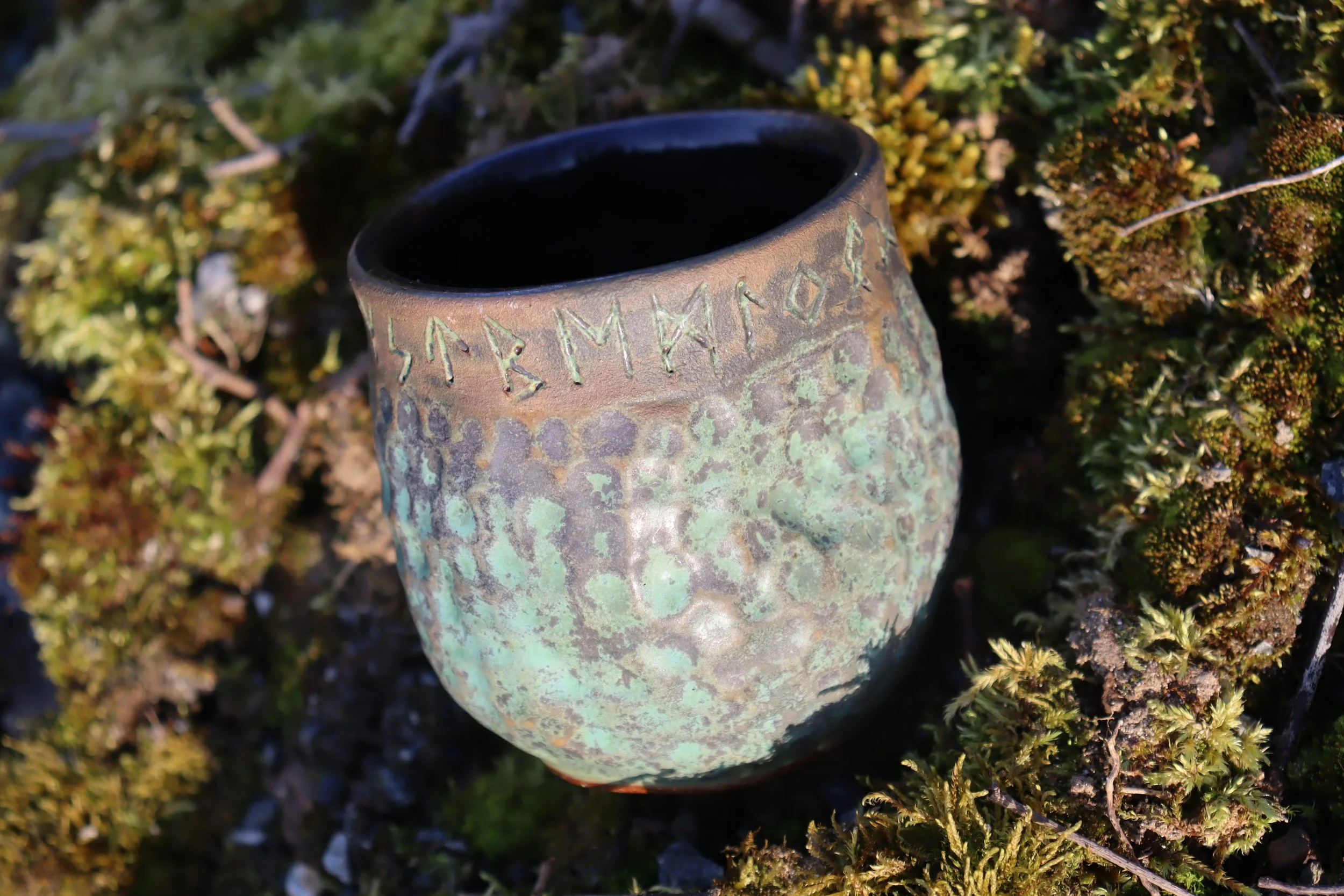
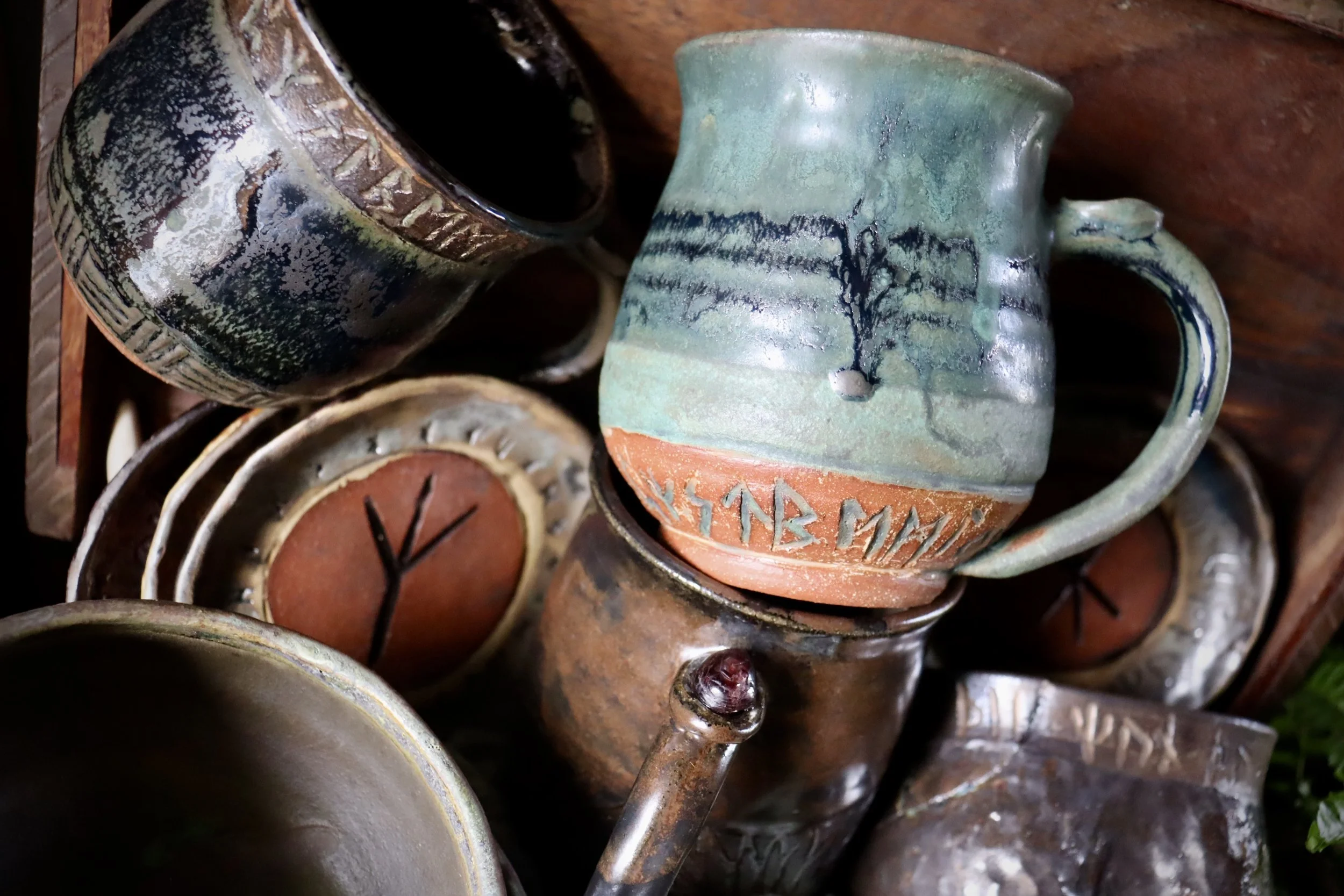
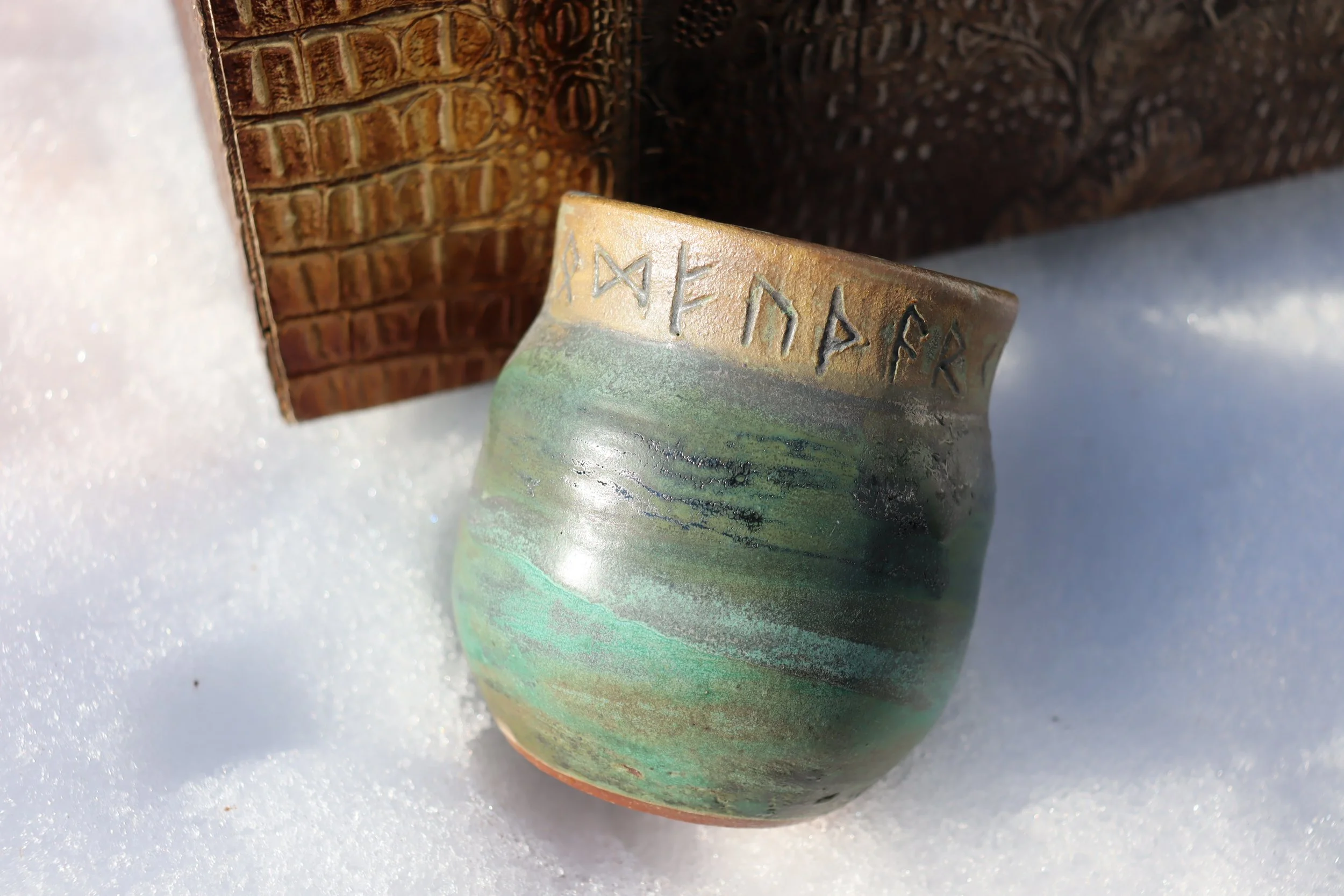
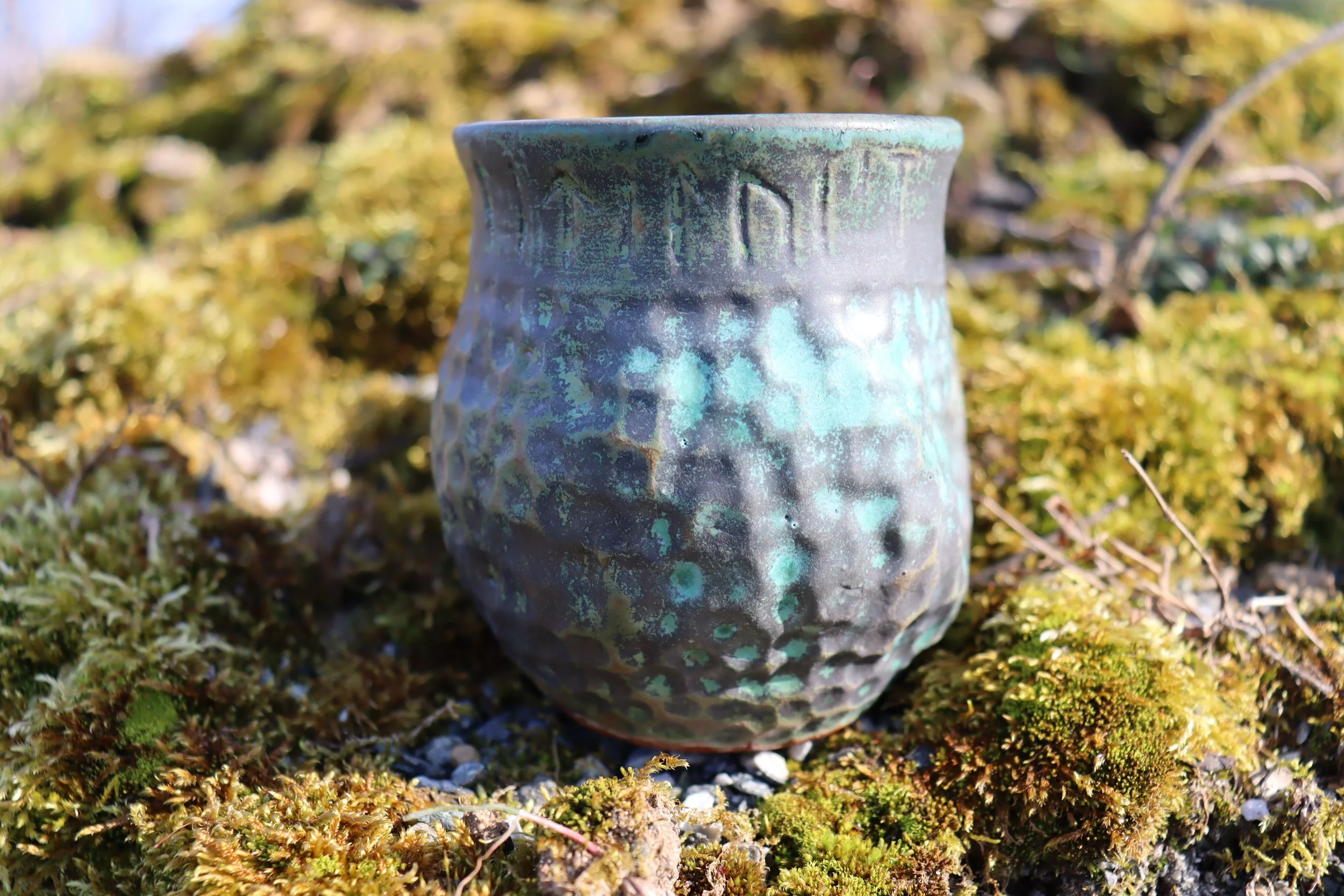
10oz handmade cup intended to look like ancient hammered-metal with an old copper patina glaze and hand-carved (Elder Futhark) Runes.
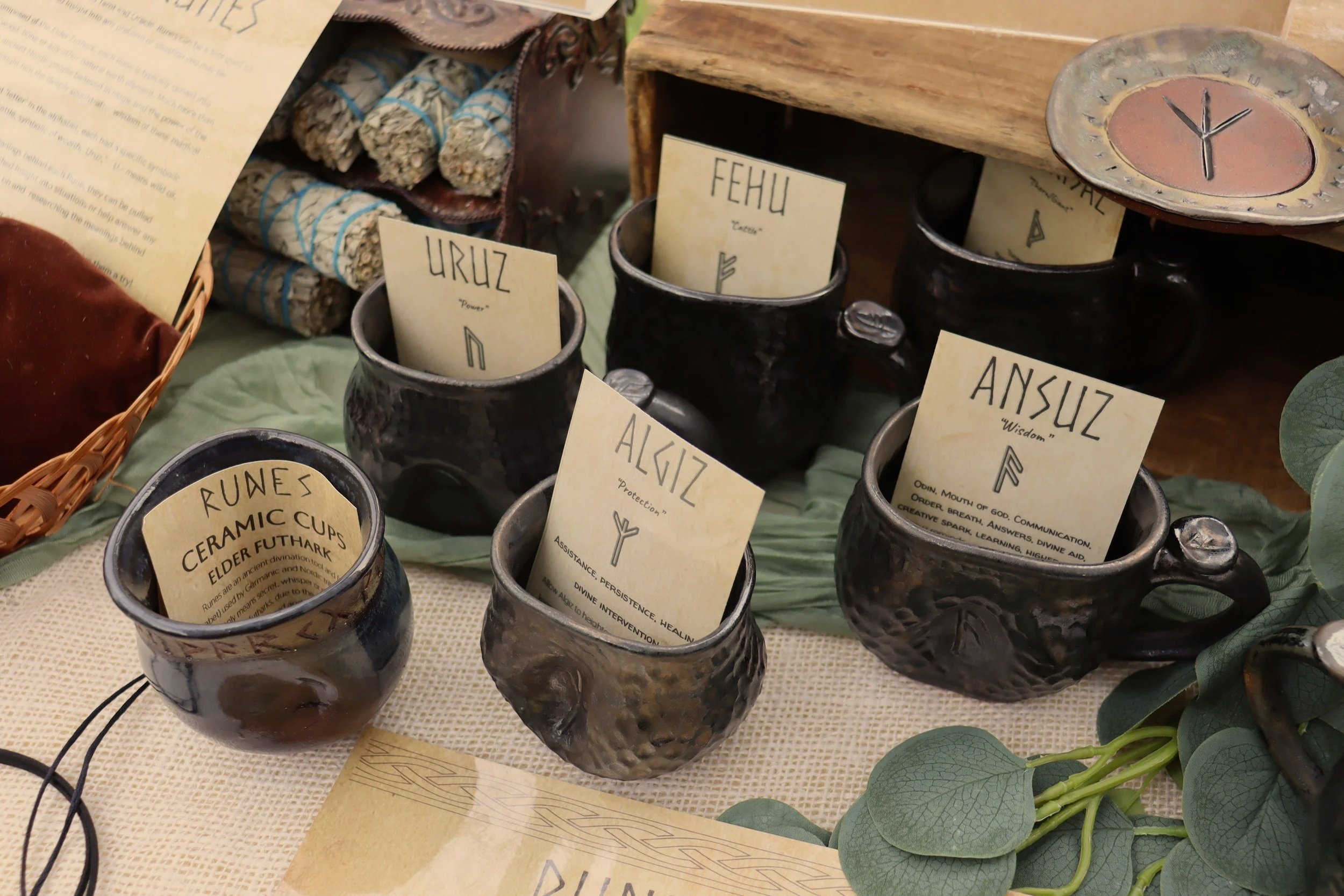
Runes are an ancient divination tool and futhark (alphabet) used by Germanic and Nordic tribes. ‘Rune,’ simply means secret, whisper or mystery. Similar to oracle cards, Runes are used to help gain insight into situations in our lives.
There are various futharks, due to the evolution over time as language progressed and tribes intermingled. The Elder Futhark, the oldest known, dates back to c. 160 CE. until about c.700 CE.
The Younger Futhark, illuminated the Viking Age from 790 CE. to c. 1100 CE.
The Anglo- Saxon Futhorc, became a popular writing system in England from the 5th-11th century.
The use of Runes in Scandinavia continued well into the Middle Ages and beyond.
Divination Runes are composed of the Elder Futhark, each Rune is typically carved into small pieces of stone, metal, wood, bone or any other natural earth element. As each Rune symbolized a different ‘letter’ in the alphabet, each had a specific symbolic meaning. For example, ‘Fehu,’ F - means cattle, symbolic of wealth. ‘Uruz,’ U - means wild ox, symbolic of strength or power.
Once one becomes accustomed to the meanings behind each Rune, they can be pulled and messages can intuitively be put together to shed insight into situations or help answer any questions one may have. Spending time meditating on and researching the meanings behind each rune is recommended
Runes have been known to carry magical qualities as well, as the people of Scandinavia believed in a form of magic called Seidr. Seidr is a pre-Christian Norse shamanism that is concerned with discerning the course of fate and working within its structure to bring about change through spirit journeys, magical healing and prophecy. Some believe that by carrying or carving runes, one will draw those energies into their daily lives.

12oz Handmade mug intended to look like ancient hammered-copper.
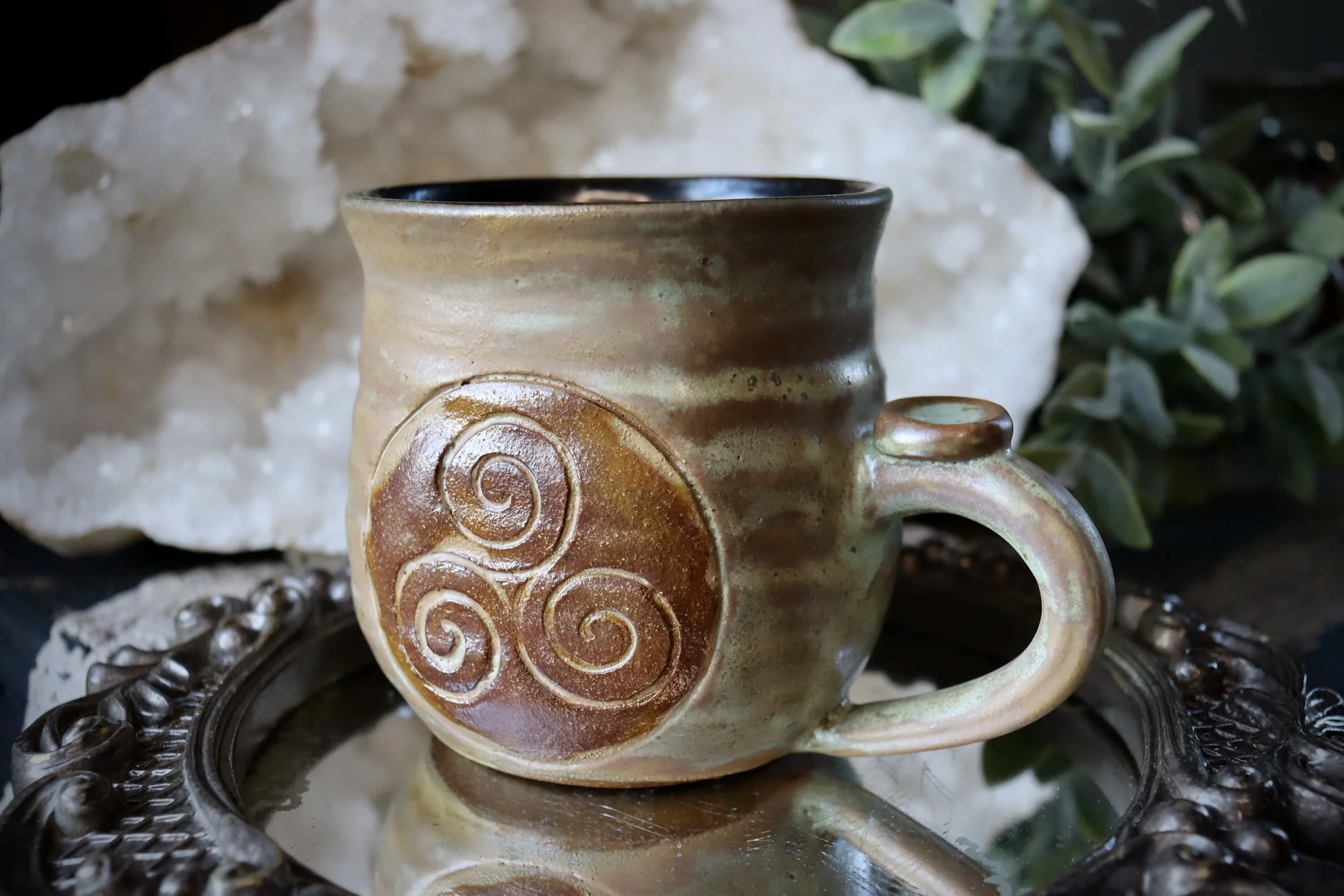
Triskelion, Triskelle or Triple Spiral - An ancient Celtic symbol that signifies the power of “3.” The spirals are said to symbolize the inner and outer worlds; the themes of birth, death and rebirth; and the connection of past, present, and future; and the unity of mental, physical and the spiritual self.
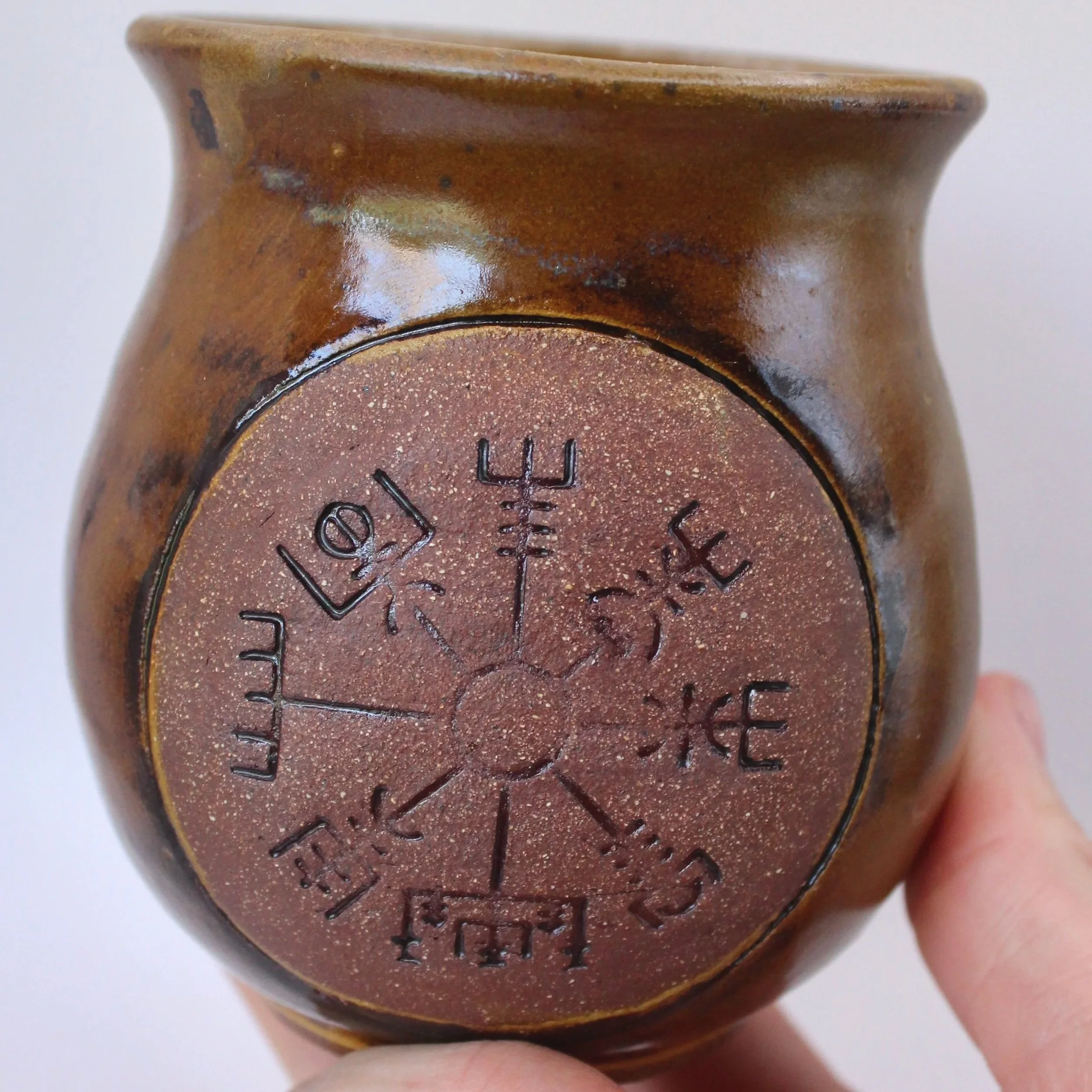
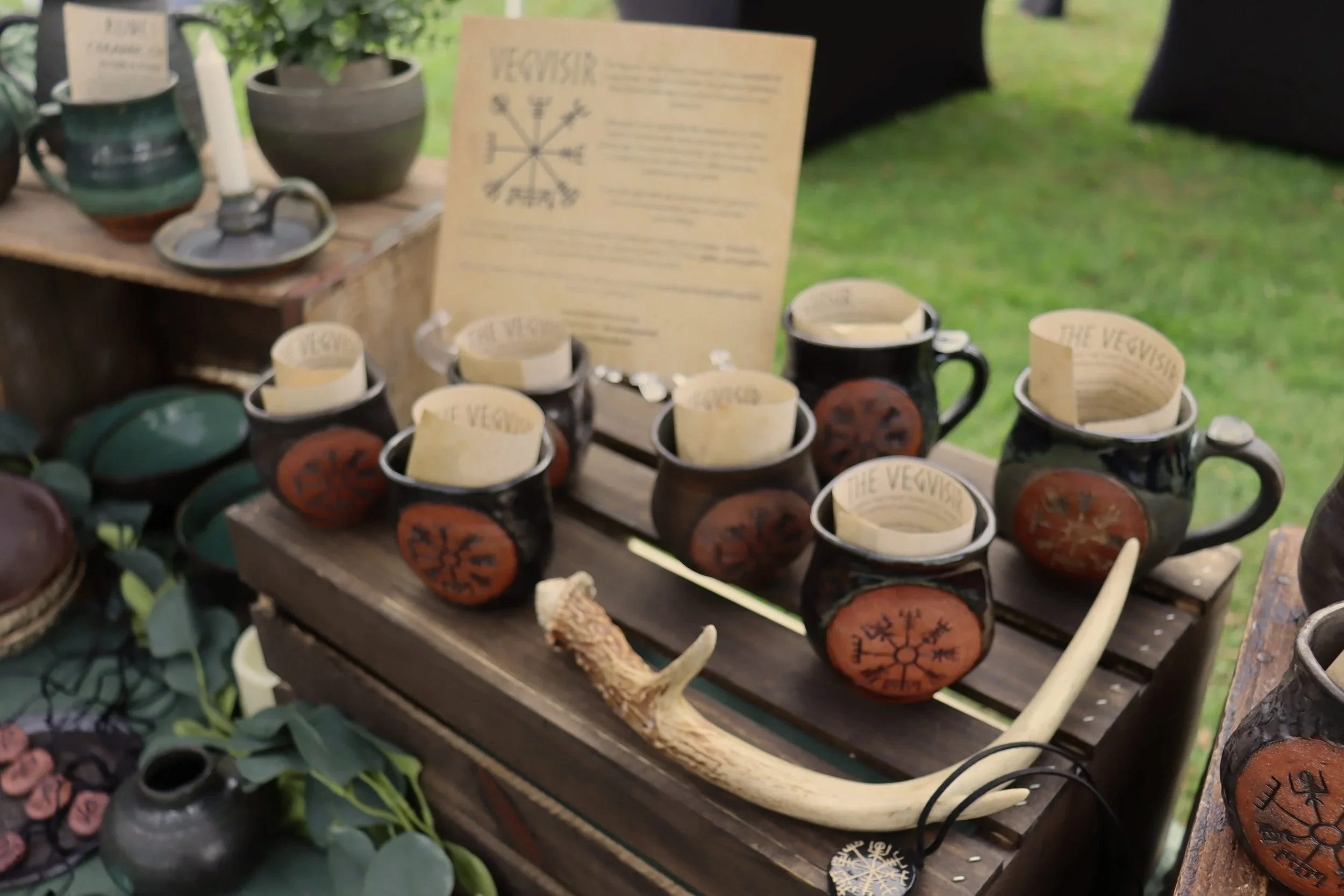
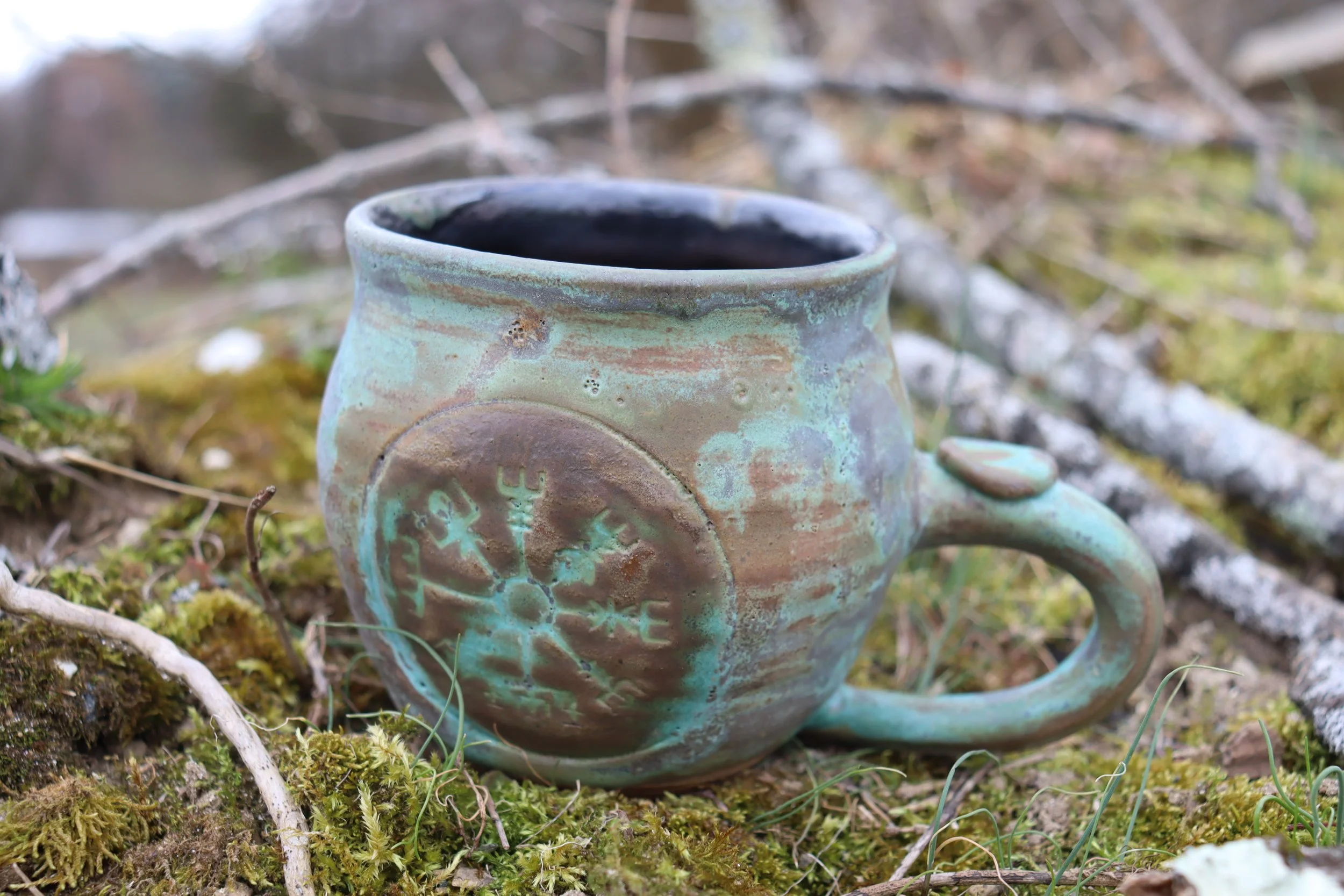
8oz handmade cup with Vegvisir stamped.
Vegvisir
An Icelandic stave, symbolic of a way-finder, meant to prevent the person carrying it from losing their way. A symbol of guidance and protection.
“Carry this sign with you and you won’t get lost in storms or bad weather, even in unfamiliar surroundings.”
The Vegvisir is created with 8 Rune staves - Protection, direction, stability, finding one’s way, making right decisions, being in control, safety, and guidance are the intentions set behind this iconic symbol. Allow your Vegvisir to help you find your way along your journey, even if you do not yet know your direction or destination.
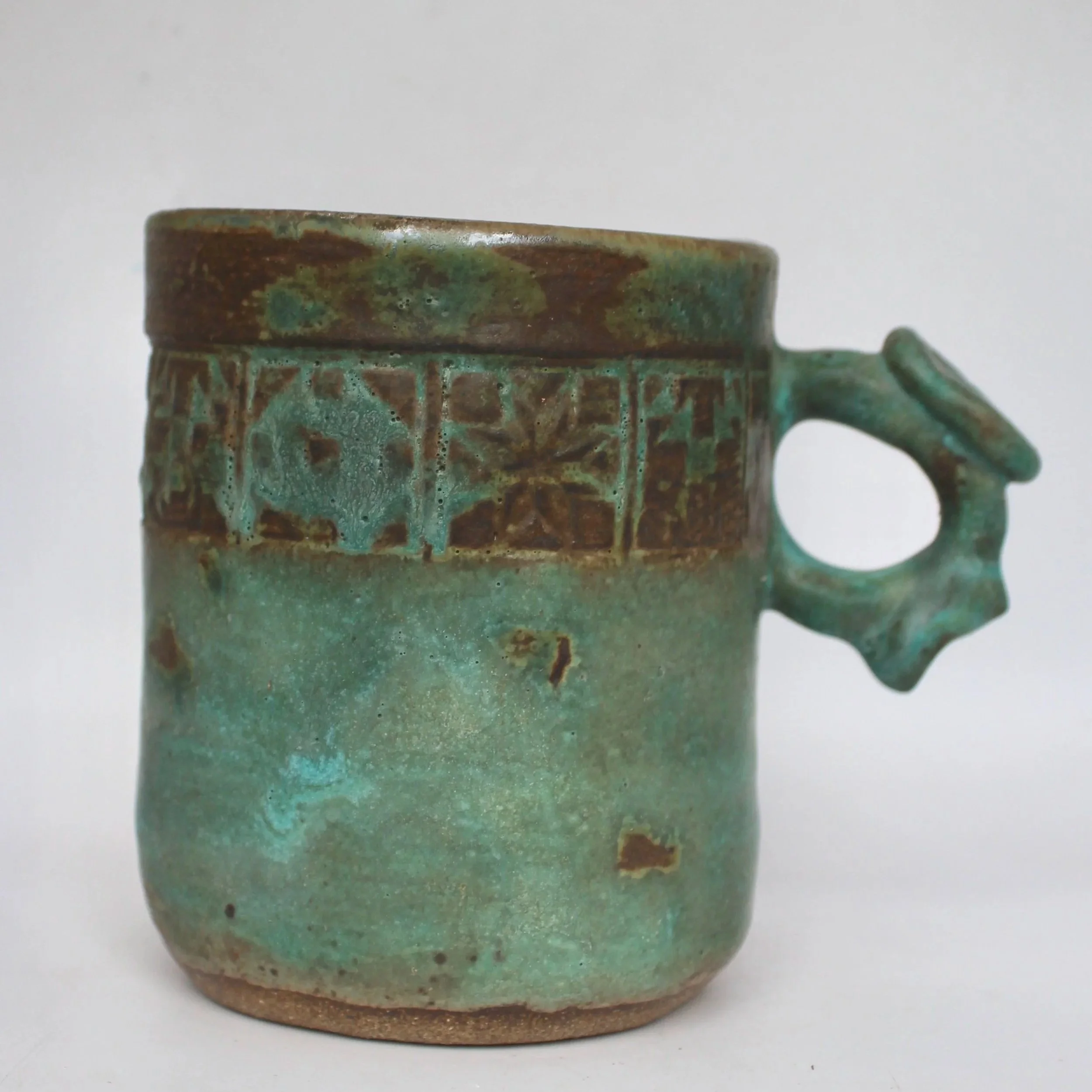
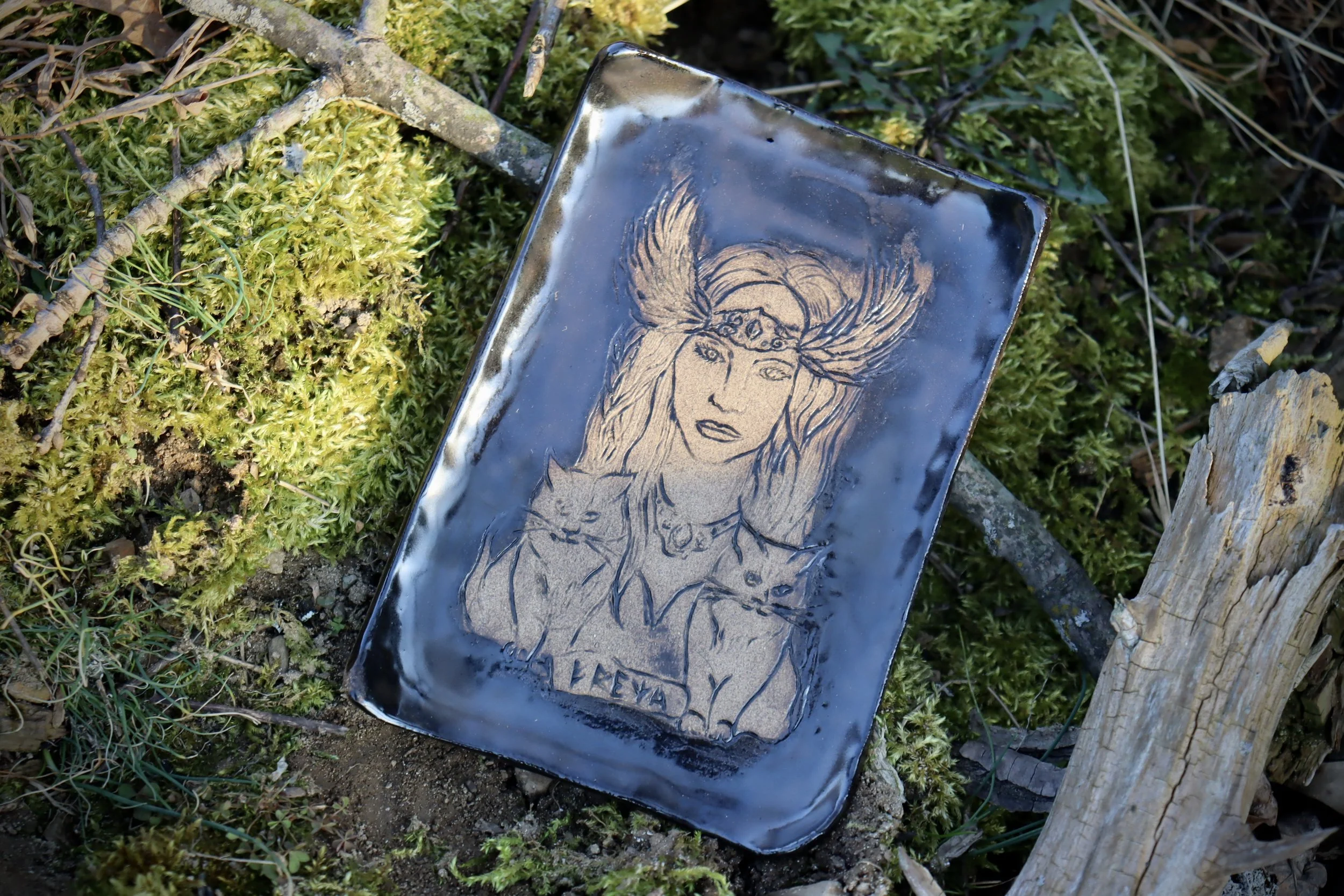
Handmade slab-constructed mug with ancient-inspired designs and old copper glaze.
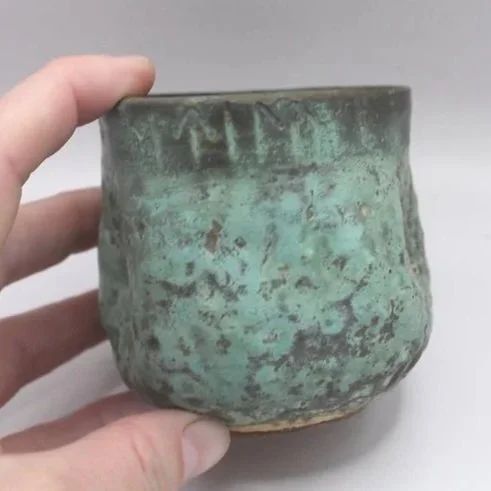
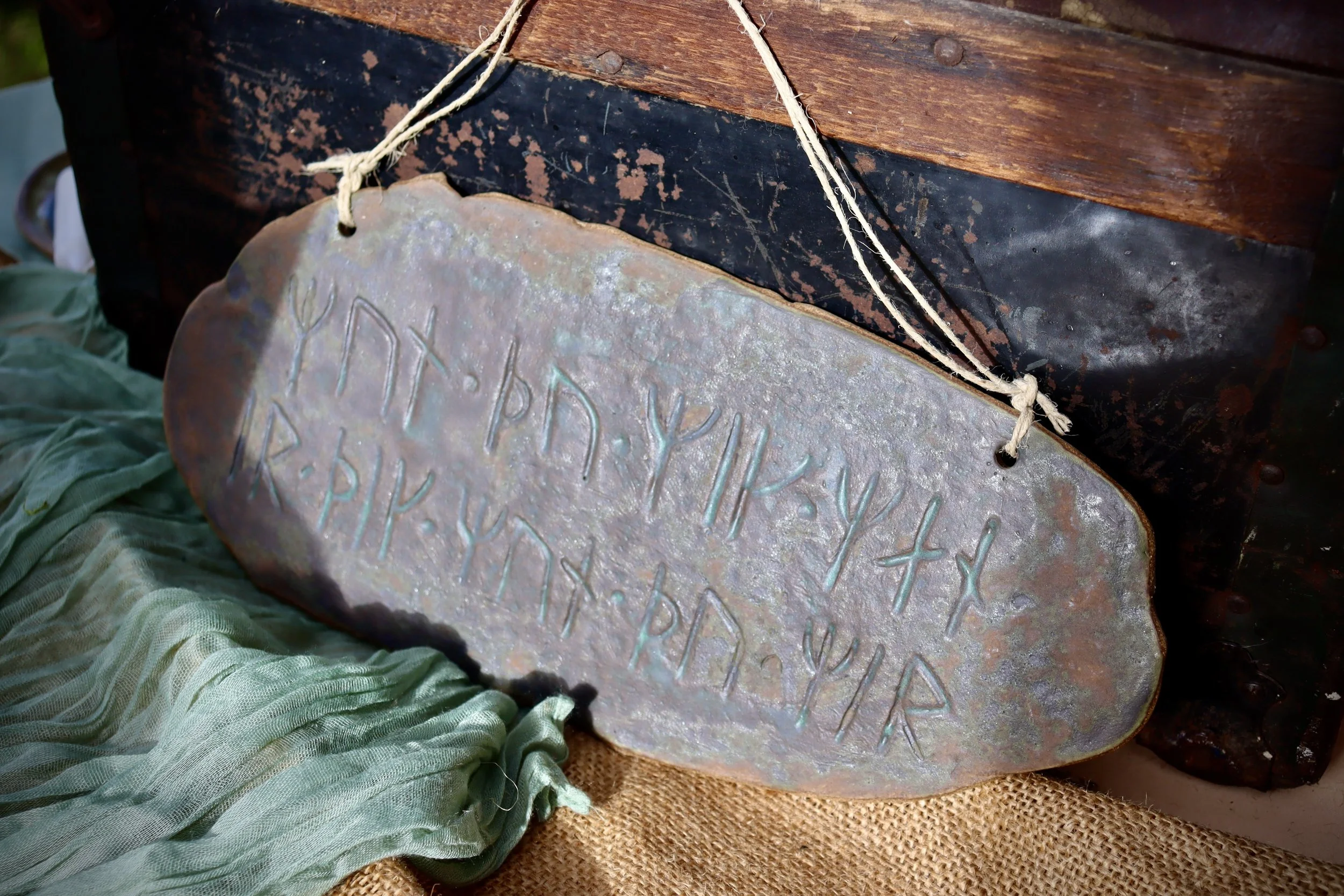
Handmade 6-8oz ceramic cup with handcarved Runic insciption inspired by archaeological discovery.
The Oseberg Ship; a discovery found in 1904 reveals one of Norway’s most intriguing finds of the Viking Age… the gravesite of two mysterious women. Not only was it a highly prestigious ship with elaborate carvings, treasures and animal sacrifices; but it was the final resting place intended for someone of incredibly high ranking. Speculations have been made around the identity of these two women; whether they were related or of equal status. Their clothing and diets indicate their high-status and several items hint one of these women could have been a sorceress, or Völva.
One item in particular that was discovered was a piece of wood, thought to be part of an oar or staff with runic inscriptions that read,
“litet-vis maðr,”
which translates into English as:
“man knows little.”
Whether or not this truly was the gravesite of a powerful all-seeing Völva, no one really knows what this runic inscription stood for. Was it an ancient enigmatic musing, contemplating the matters of life and death? Could she see the unimaginable with her connections to a higher power, and understand what mankind could not? Or was she a hysterical woman for her time, wanting to leave her mark on the world after being asked the question similar to, “what do you want written on your tombstone?”
“Man knows little.”

8-10oz handmade cup with Vegvisir.
Vegvisir - “way” (vegr) “shower” (vísir)
An Icelandic stave, symbolic of a way finder, meant to prevent the person carrying it from losing their way. A symbol of guidance and protection. Although many associate the Vegvisir as a Viking symbol, it historically does not date back to the Viking age. The Huld Manuscript, which was written in Iceland by Geir Vigfusson in 1860 indicates, (translated into English) “Carry this sign with you and you won’t get lost in storms or bad weather, even in unfamiliar surroundings.”
The Vegvisir is created with 8 Viking Rune staves created with the Runic alphabet. Protection, direction, stability, finding one’s way, making right decisions, being in control, safety, and guidance are the intentions set behind this iconic symbol.
Allow your Vegvisir to help you find your way along your journey, even if you do not yet know your direction or destination.
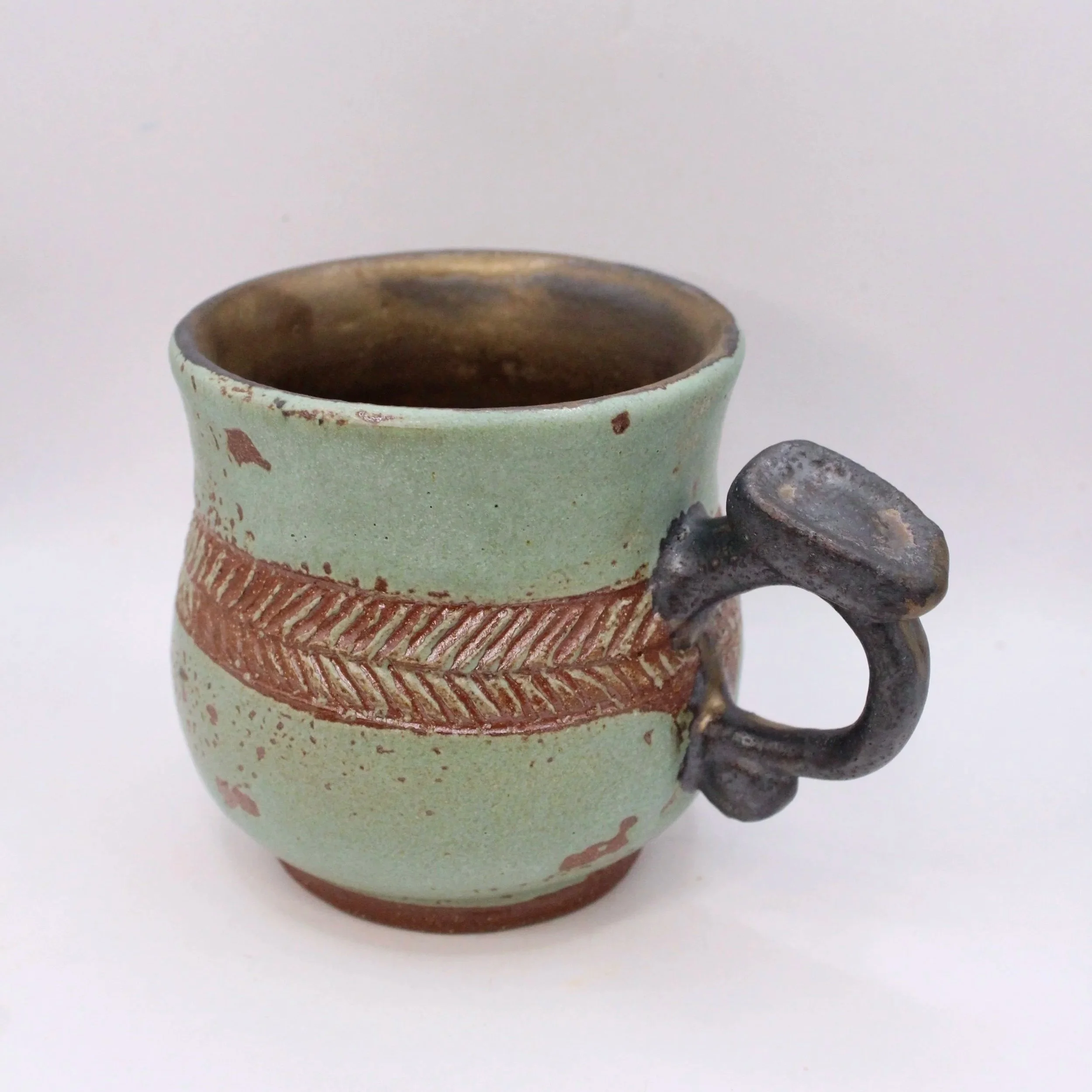
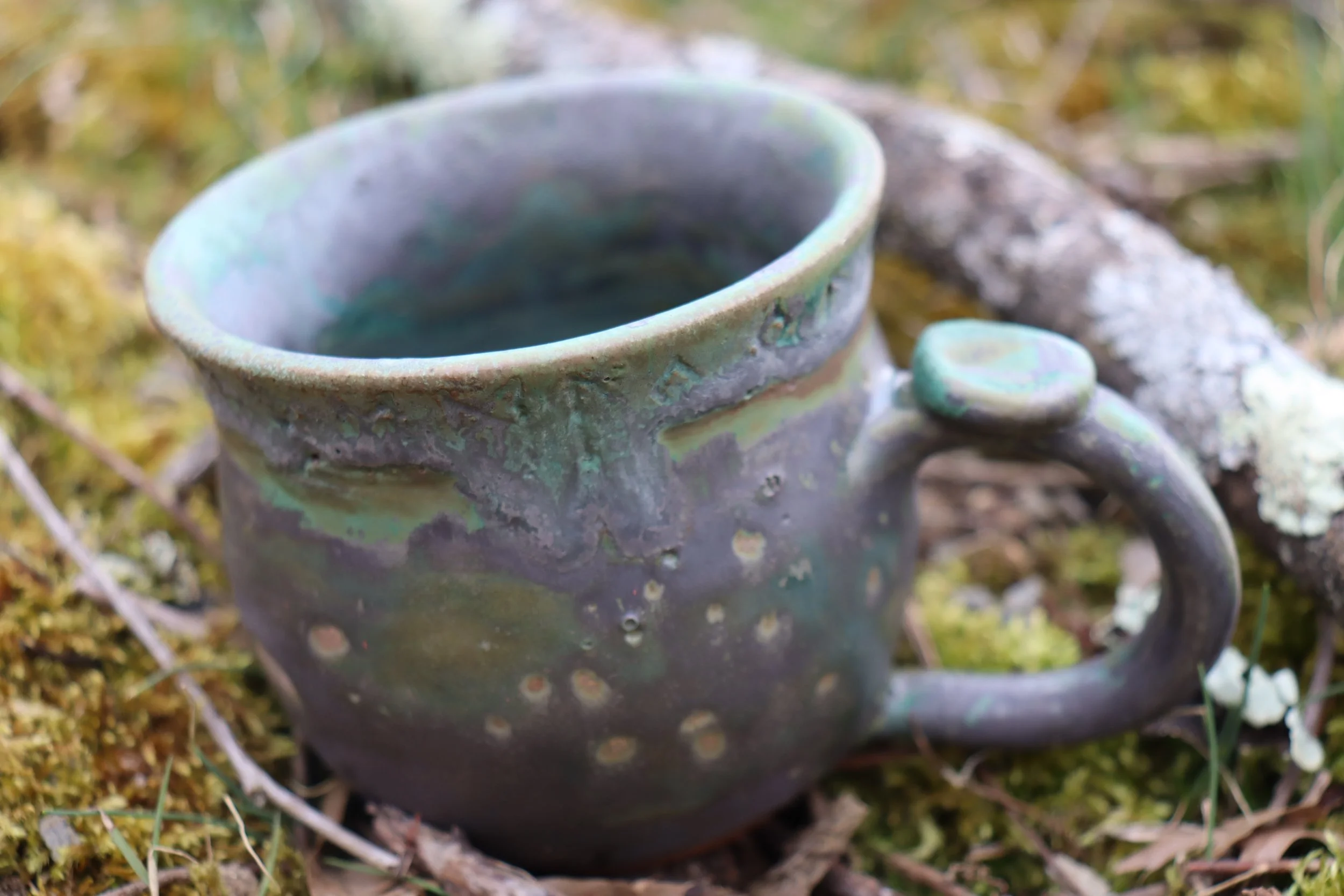
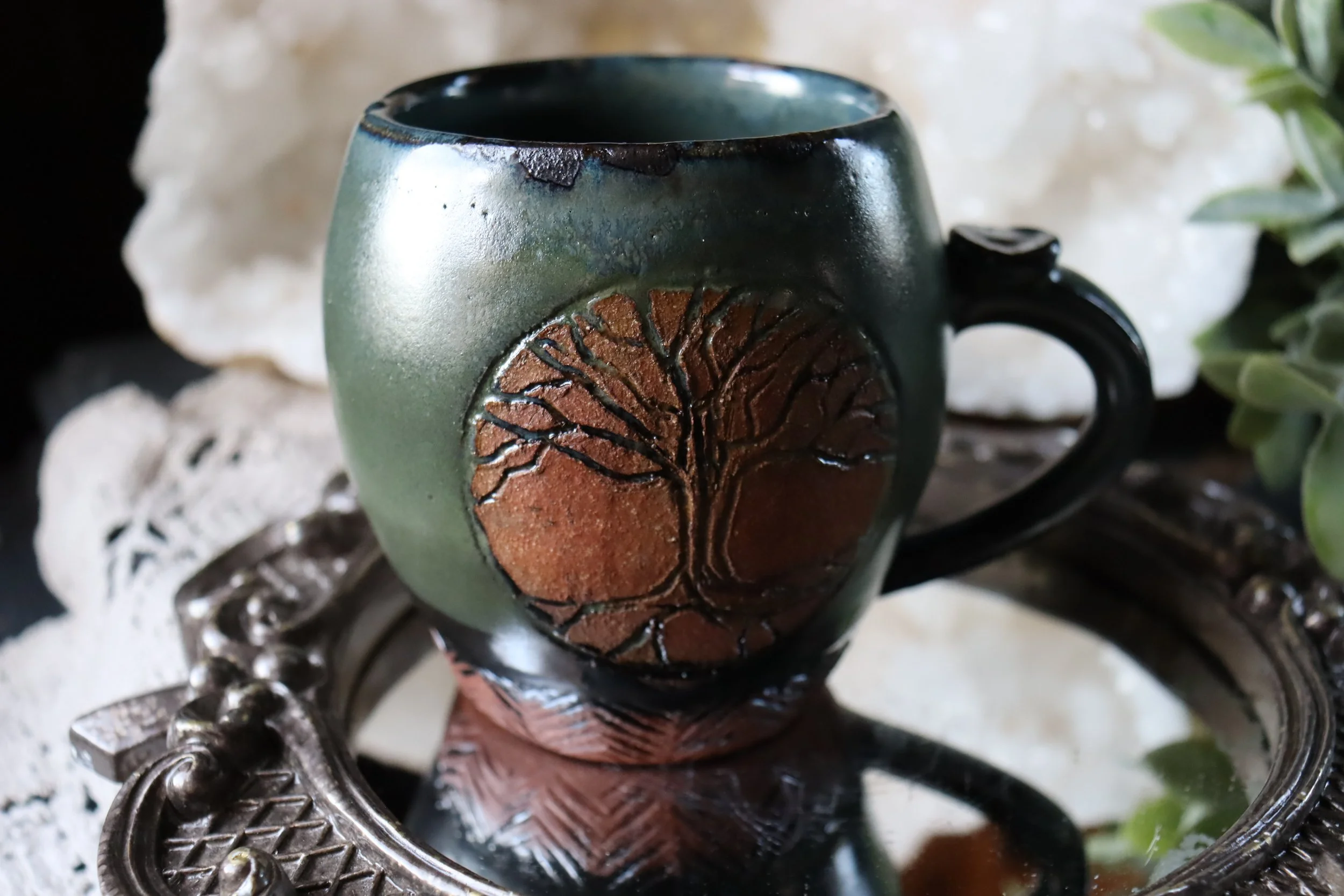
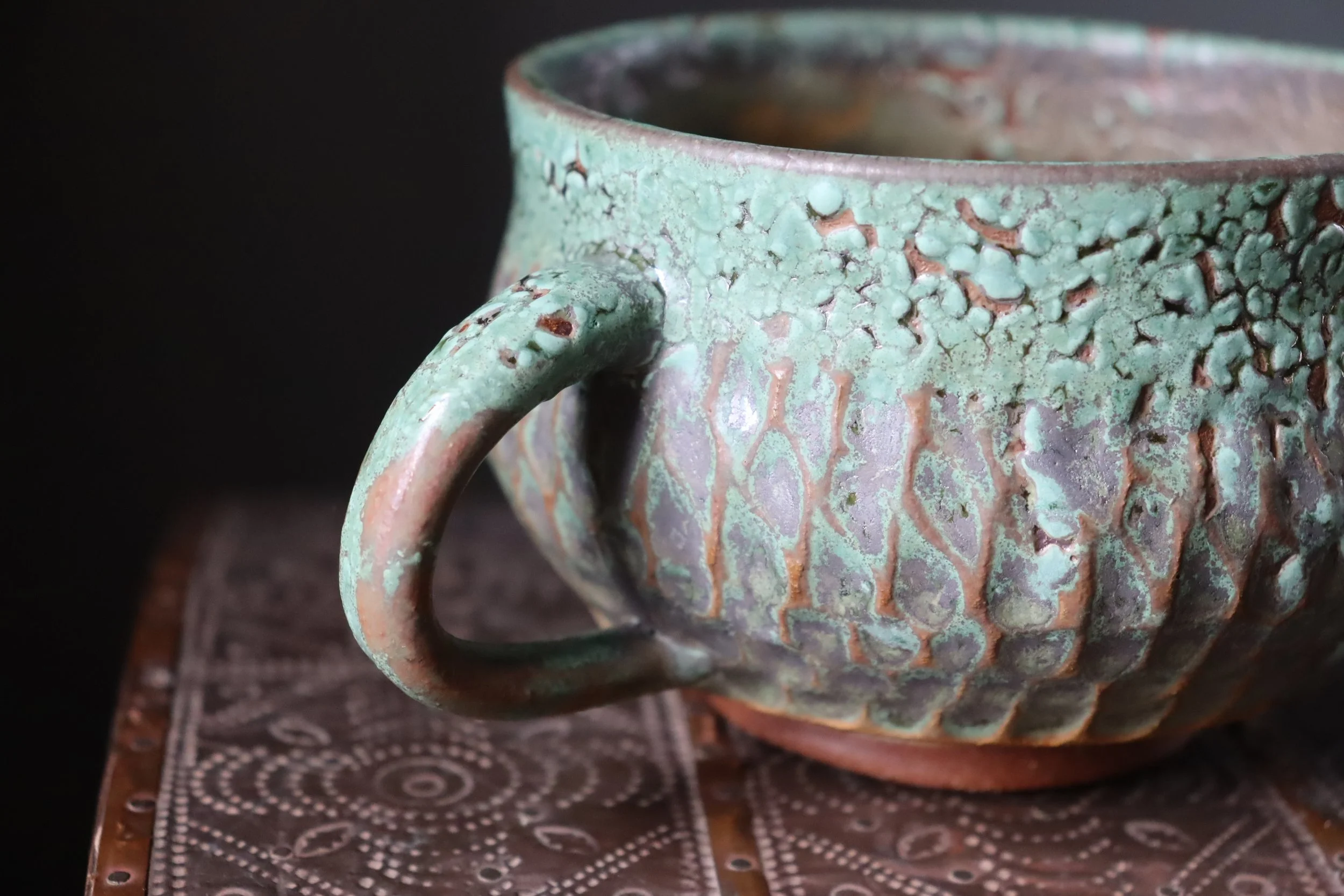
10oz handmade mug featuring a funky, eye-catching handle that is very comfortable to hold. The designs are inspired by the ancient past and finished with a distinctive old-copper patina glaze. Each mug is crafted to be one of a kind, ensuring that no two are exactly the same—each piece is truly unique!
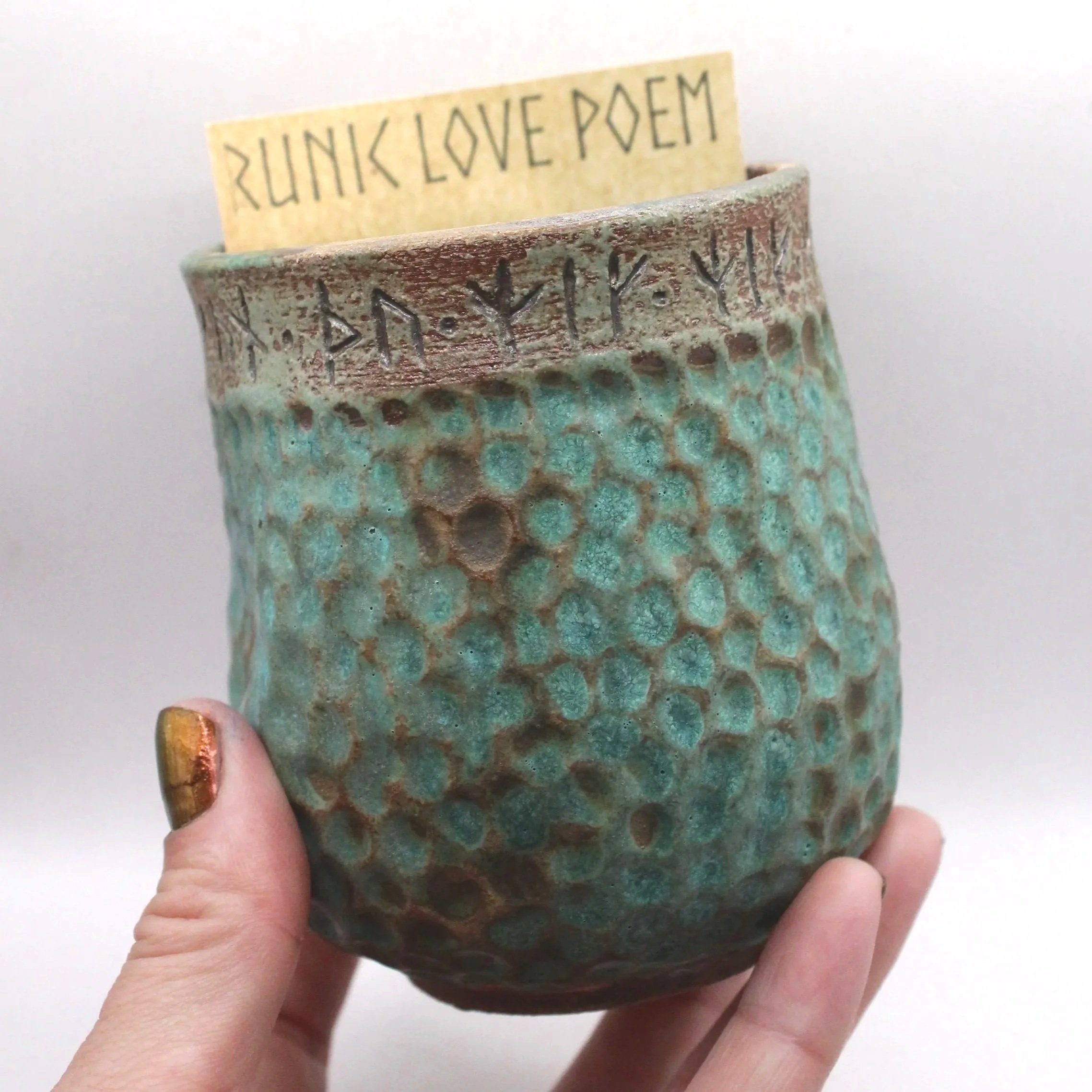
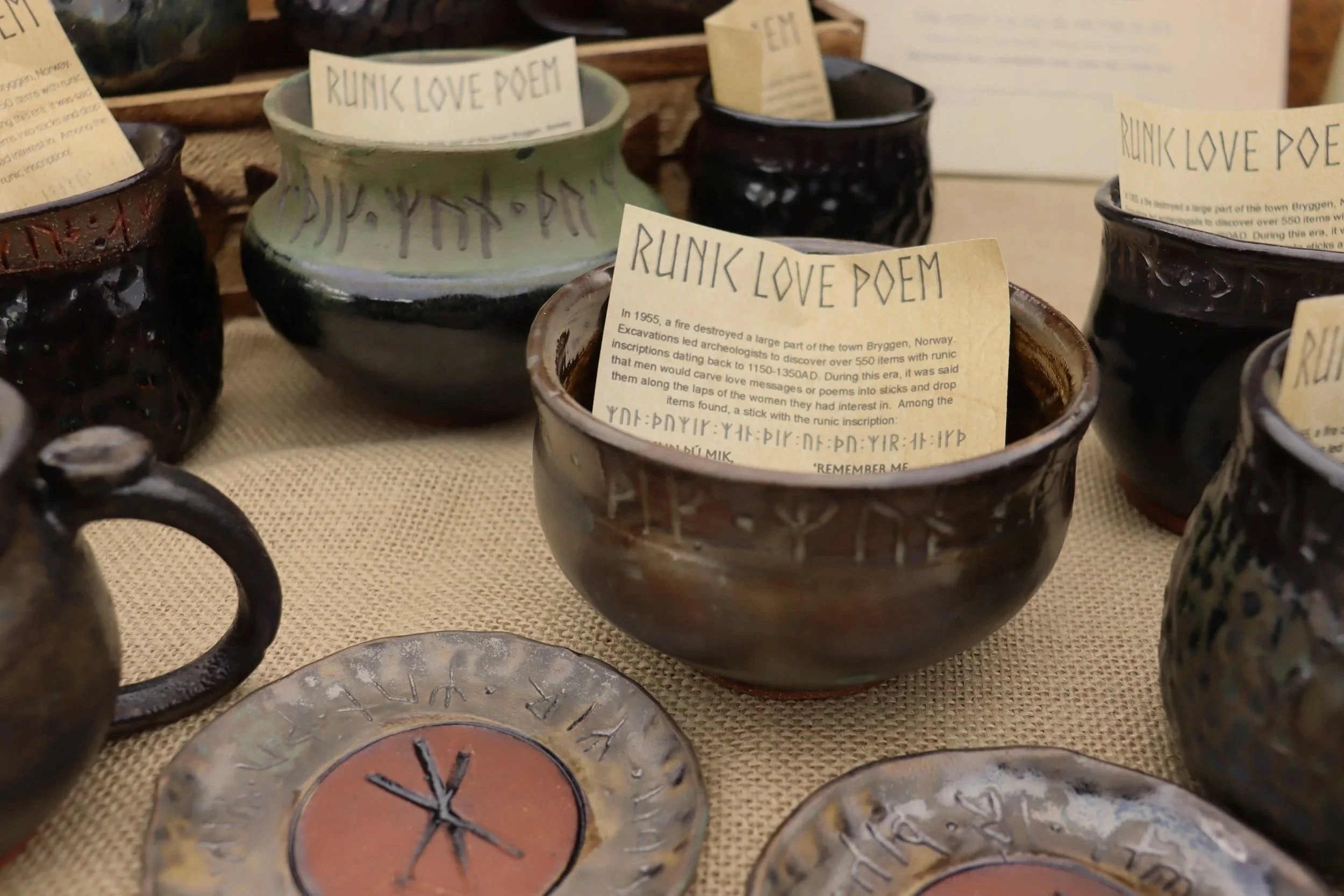
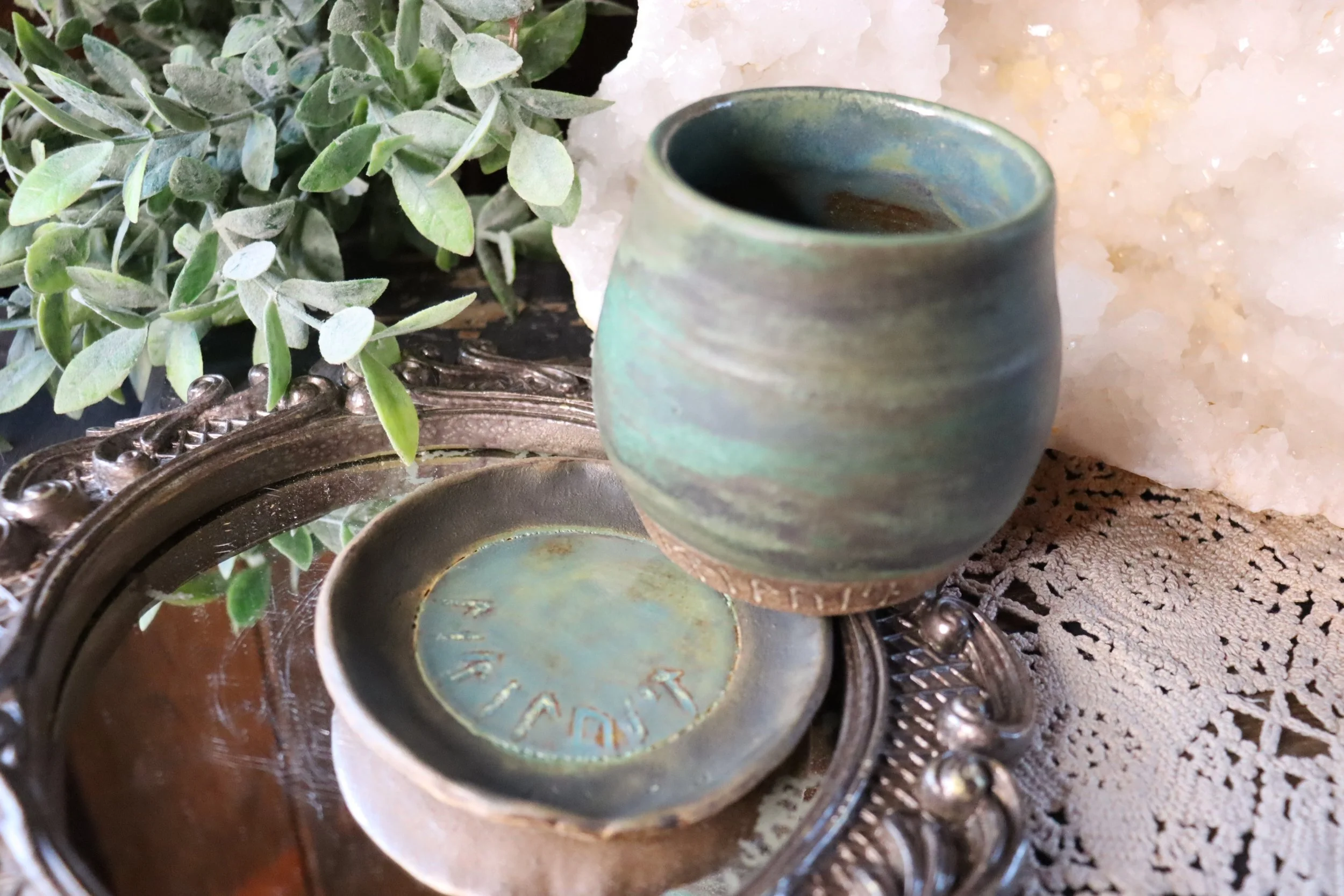
8oz handmade ceramic cup with Runic inscription inspired by archeaological findings.
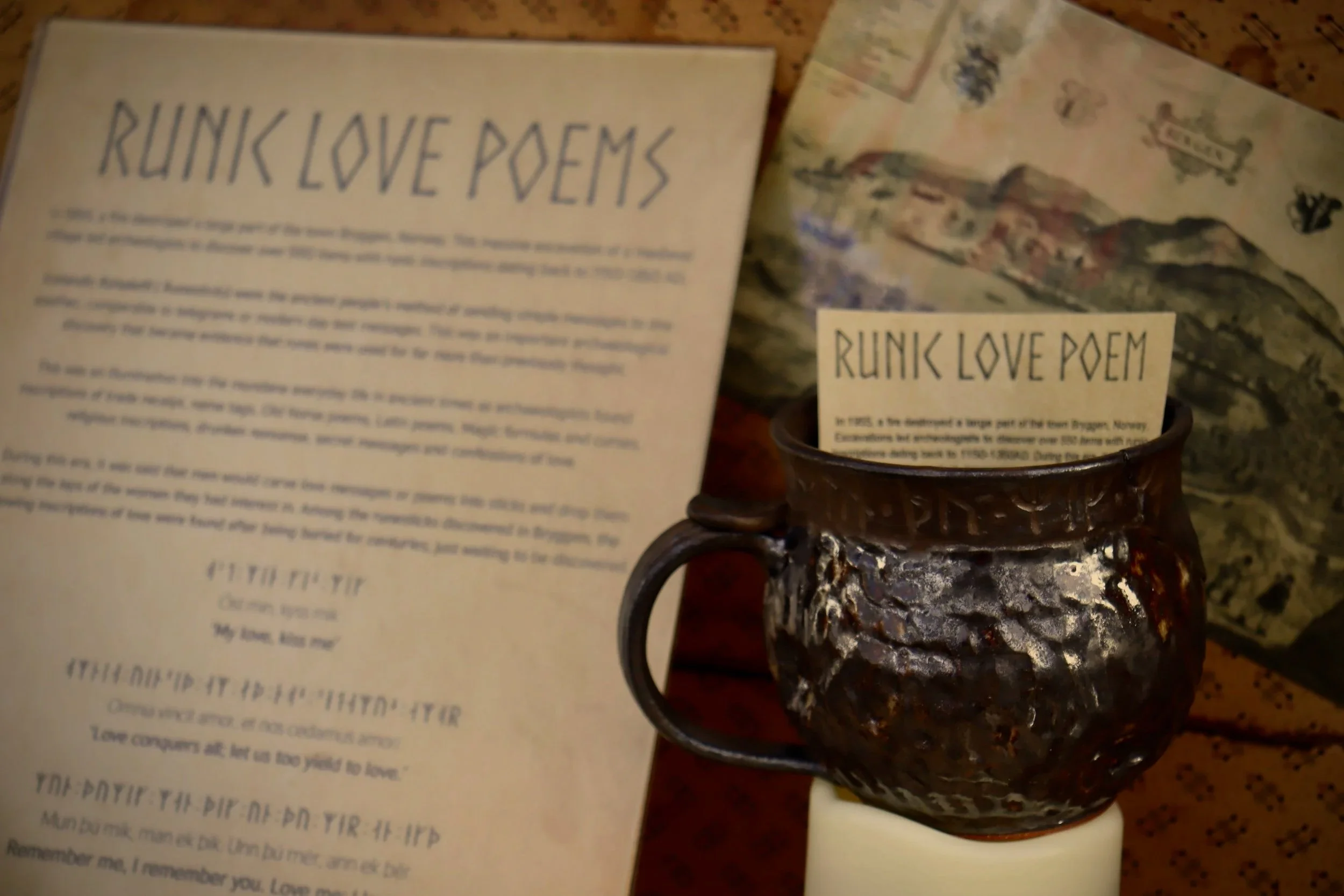
In 1955, a fire destroyed a large part of the town Bryggen, Norway. Excavations led archeologists to discover over 550 items with runic inscriptions dating back to 1150-1350AD. Among the items found, a stick with the runic inscription:
ᛘᚢᚾ•ᚦᚢ•ᛘᛁᚴ•ᛘᛅᚾ•ᛁᚱ•
ᚦᛁᚴ•ᛘᚢᚾ•ᚦᚢ•ᛘᛁᚱ
Mun þú mik, ‘Remember me,
man ek þik. I remember you.
Unn þú mér, Love me,
ann ek þér. I love you’.
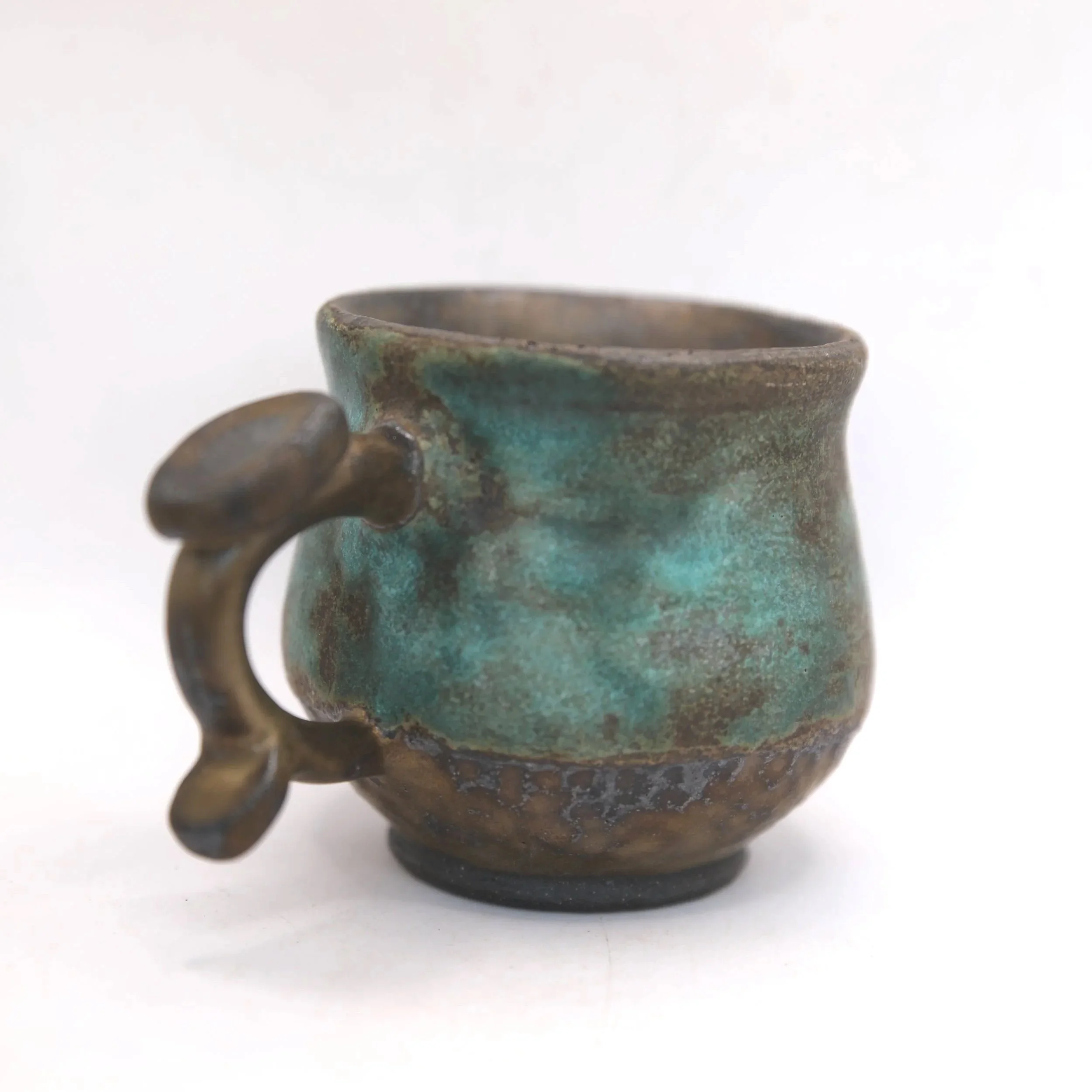
10oz handmade mug featuring a funky, eye-catching handle that is very comfortable to hold. The designs are inspired by the ancient past and finished with a distinctive old-copper patina glaze. Each mug is crafted to be one of a kind, ensuring that no two are exactly the same—each piece is truly unique!
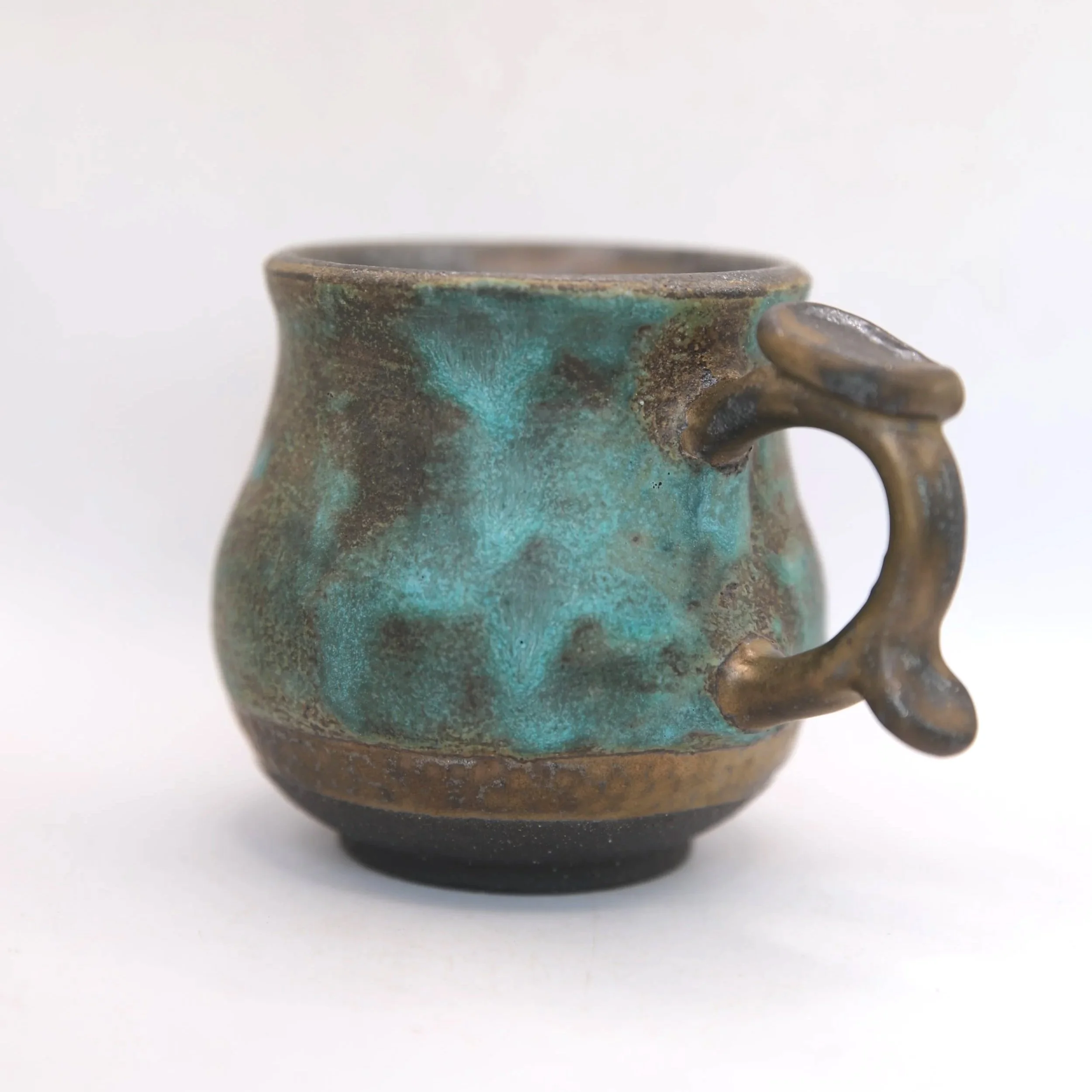
10oz handmade mug featuring a funky, eye-catching handle that is very comfortable to hold. The designs are inspired by the ancient past and finished with a distinctive old-copper patina glaze. Each mug is crafted to be one of a kind, ensuring that no two are exactly the same—each piece is truly unique!
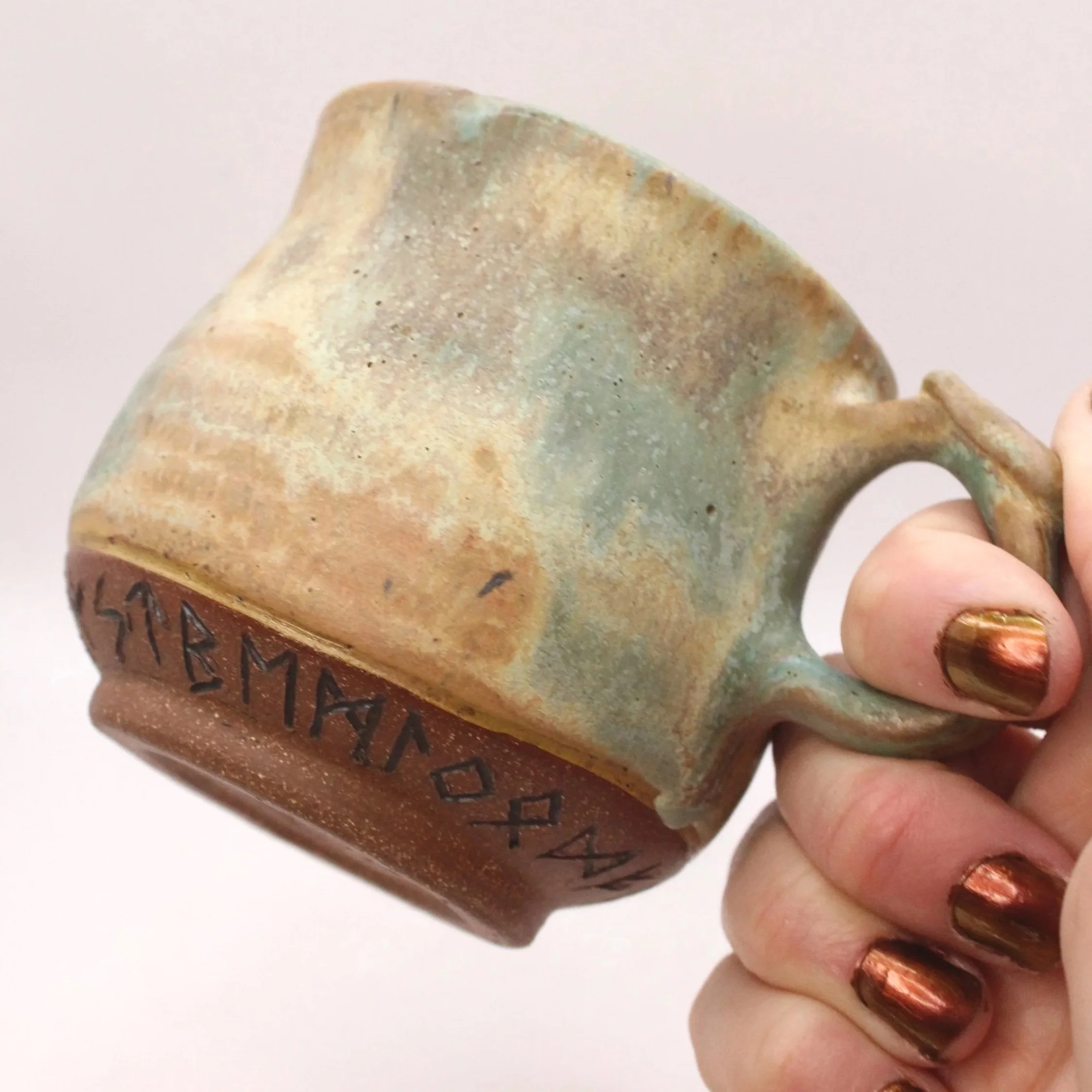
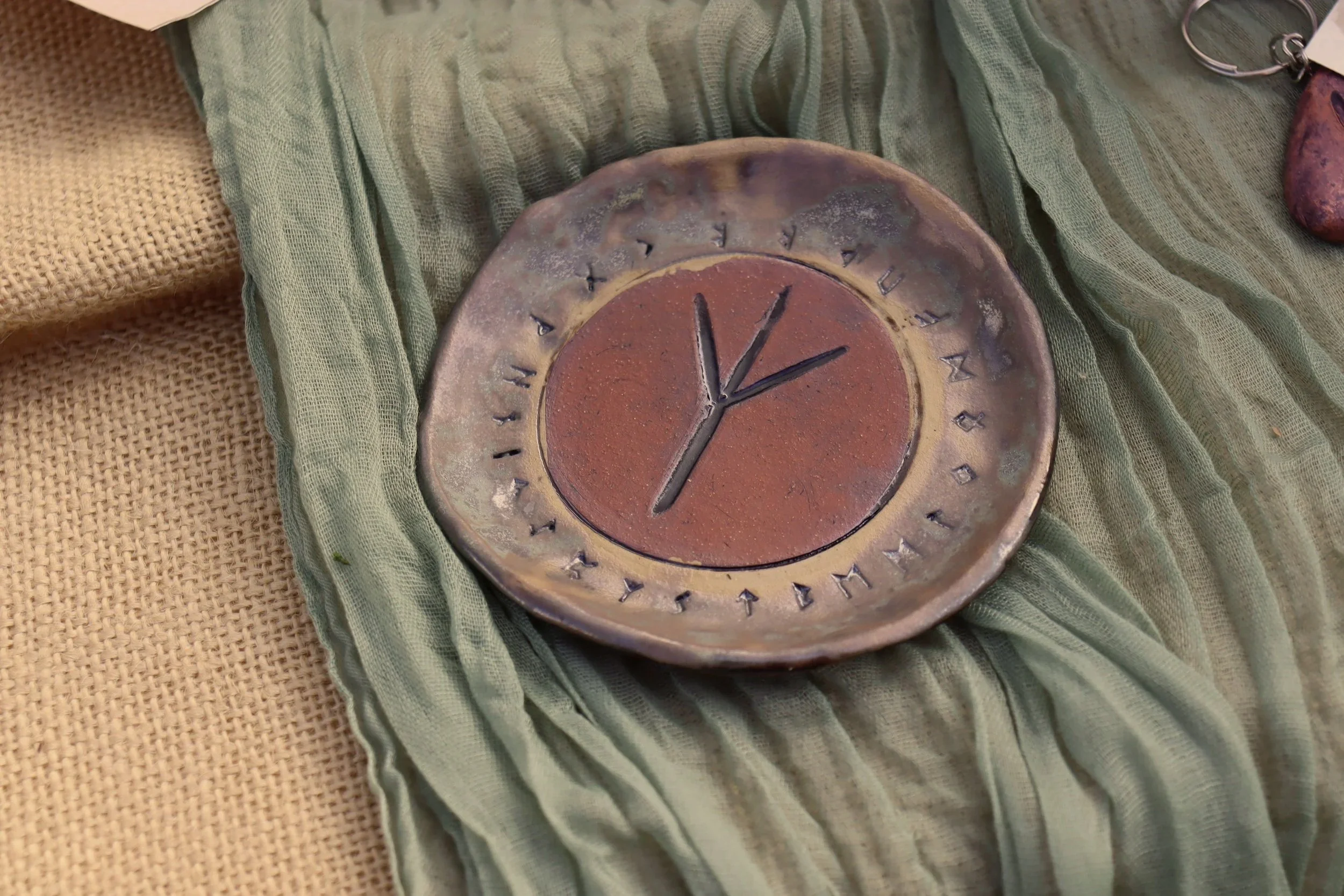
8 oz ceramic mug with Elder Futhark Runic alphabet inscribed into the surface of the clay.
Runes are an ancient divination tool and futhark (alphabet) used by Germanic and Nordic tribes. ‘Rune,’ simply means secret, whisper or mystery. There are various futharks, due to the evolution over time as language progressed and tribes intermingled. The Elder Futhark, the oldest known, dates back to c. 160 CE. until about c. 700 CE. Not only were Runes an ancient method of writing, they were also known for carrying secret messages and powerful energies.